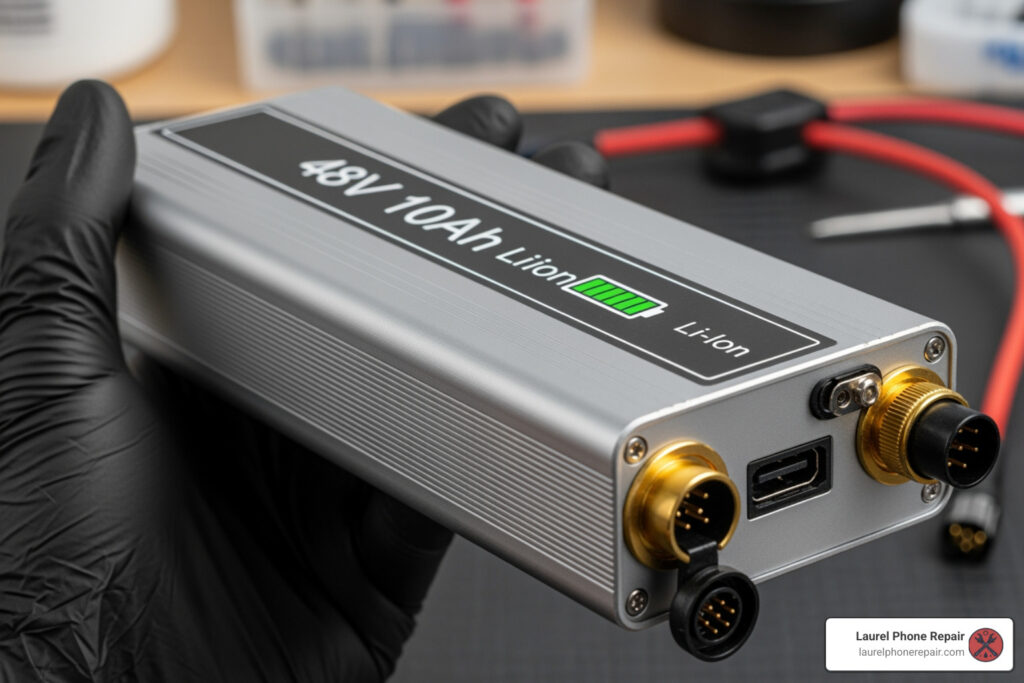
Scooter Battery Replacement: 5 Optimal Tips
Why Scooter Battery Replacement Matters for Your Ride
Scooter battery replacement becomes essential when your electric scooter loses range, refuses to hold a charge, or shows physical damage like swelling. Here’s the quick answer:
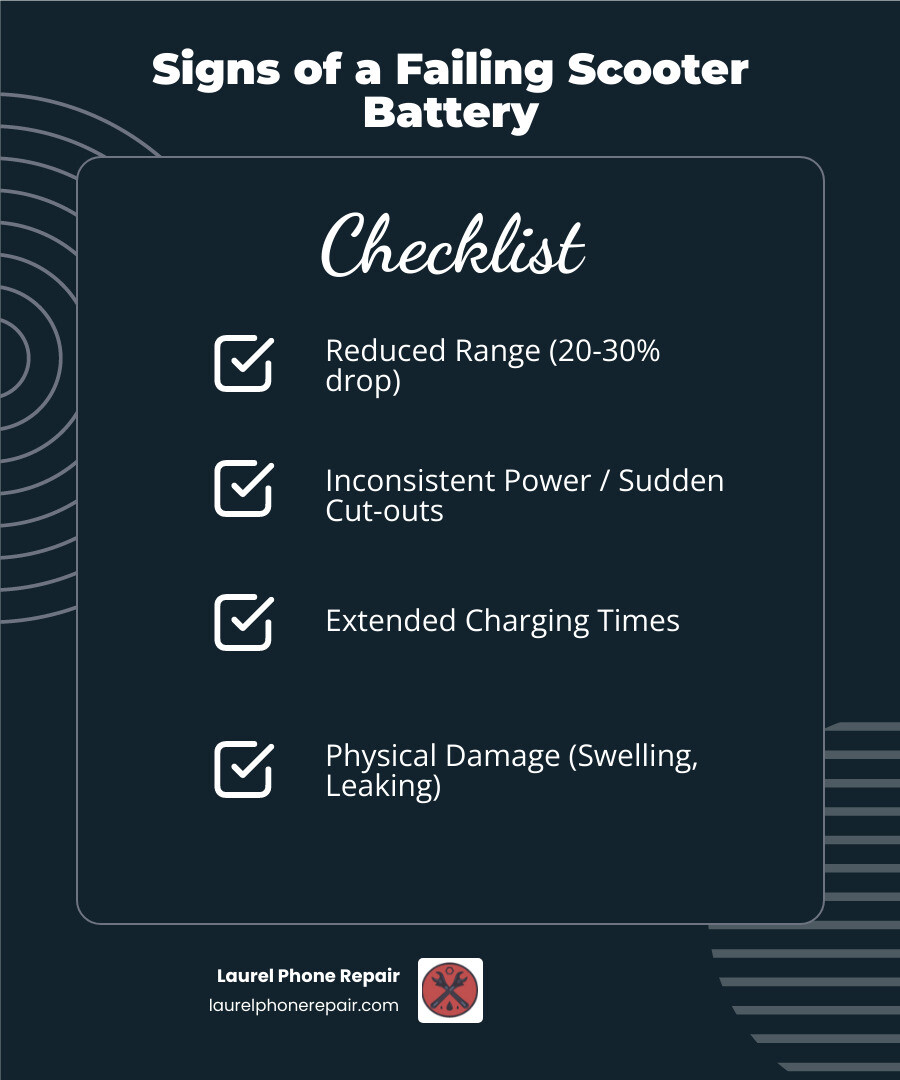
Signs You Need a Replacement:
- Range drops by 20-30% or more from original performance
- Power cuts out suddenly even when the battery indicator shows charge
- Charging takes much longer than when the scooter was new
- Physical damage like swelling, leaking, or cracks in the battery case
Basic Replacement Steps:
- Power off and disconnect the charger
- Locate the battery compartment (usually under the deck)
- Disconnect the old battery’s connectors
- Install the new battery with matching voltage and capacity
- Reconnect wires and test before reassembling
Your electric scooter’s battery is its heart. When it fails, your commute stops. Most scooter batteries last 2-3 years with proper care, but eventually, every battery degrades. Whether you’re dealing with a scooter that barely makes it around the block or one that won’t turn on at all, understanding battery replacement saves you money and gets you back on the road fast.
Modern electric scooters use lithium-ion batteries ranging from 24V to 60V. Higher capacity (measured in Ah or Wh) means longer range. The good news? Replacing a battery is straightforward for most models and doesn’t require advanced technical skills.
I’m Ralph Harris, and with over 20 years of electronics repair experience and 500+ Apple repair certifications, I’ve guided countless customers through scooter battery replacement projects that save them hundreds compared to professional service. Whether you choose DIY or professional help, this guide will walk you through everything you need to know.
Is It Time for a New Battery? Signs of a Failing Power Pack
Nobody wants to be stranded mid-commute because their scooter decided to take an unscheduled nap. Recognizing the signs that your electric scooter battery needs replacement is the first step towards a smooth repair. A failing battery often gives off subtle hints before it completely gives up the ghost.
Significantly Reduced Performance
One of the most common and frustrating indicators of a dying battery is a noticeable drop in your scooter’s performance.
- 20-30% Range Reduction: Electric scooter batteries can last 2-3 years or more with proper care. However, a 20-30% reduction in range is normal after a couple of years of use. If your scooter used to travel 25 miles on a charge but now only manages 15 miles or less, that’s a clear red flag. Anything beyond this normal degradation indicates a significant capacity loss, meaning your battery can no longer hold as much energy as it once could.
- Slower Acceleration and Lower Top Speed: Does your scooter feel sluggish off the line? Is it struggling to hit its usual top speed, especially on inclines? This can be due to “voltage sag.” An aging battery struggles to deliver the peak current required by the motor, leading to reduced power output. It’s like trying to run a sprint on an empty stomach – you just don’t have the energy.
- Battery Indicator Inaccuracy: You might notice your battery indicator showing plenty of charge, only for the scooter to suddenly lose power and shut down. This inconsistent performance is a classic symptom of an unhealthy battery pack that can no longer maintain a stable voltage under load.
If you’re unsure whether your scooter’s performance issues stem from the battery or another component, we offer comprehensive diagnostic services right here in Laurel, Hattiesburg, and Jackson, Mississippi. Our experienced technicians can accurately pinpoint the problem.
Charging and Physical Issues
Beyond performance, how your battery behaves during charging and its physical condition can also tell you a lot.
- Takes Longer to Charge: If your scooter is taking significantly longer to reach a full charge than it used to, it could be a sign of internal resistance building up within the battery cells. While some extended charging is normal over time, a drastic increase suggests the battery is working harder to accept a charge, often due to degradation.
- Overheating During Charging: A healthy battery should warm up slightly during charging, but if it becomes excessively hot to the touch, it’s a serious warning sign. Overheating can indicate internal shorts or damaged cells, posing a safety risk.
- Visible Cracks, Leaking Fluid, or Puffed/Swollen Battery Case: Any visible physical damage to your battery pack is a critical safety concern. Swelling, often referred to as “puffing,” is particularly dangerous in lithium-ion batteries. It indicates a buildup of gases inside the battery, which can lead to fire or explosion. If you see swelling, stop using and charging the battery immediately. Leaking fluid, especially from sealed lead-acid (SLA) batteries, also signals internal damage and potential hazards. These issues are not just about performance; they’re about your safety.
Choosing the Right Replacement Battery
Once you’ve determined that your scooter battery is indeed ready for retirement, the next step is finding its worthy successor. This isn’t just about grabbing the first battery you see; it requires a bit of detective work to ensure compatibility and optimal performance.
Key Specifications to Match
To ensure your new battery fits and functions correctly, you need to pay close attention to several crucial specifications. Think of it like buying new shoes – you need the right size, style, and fit!
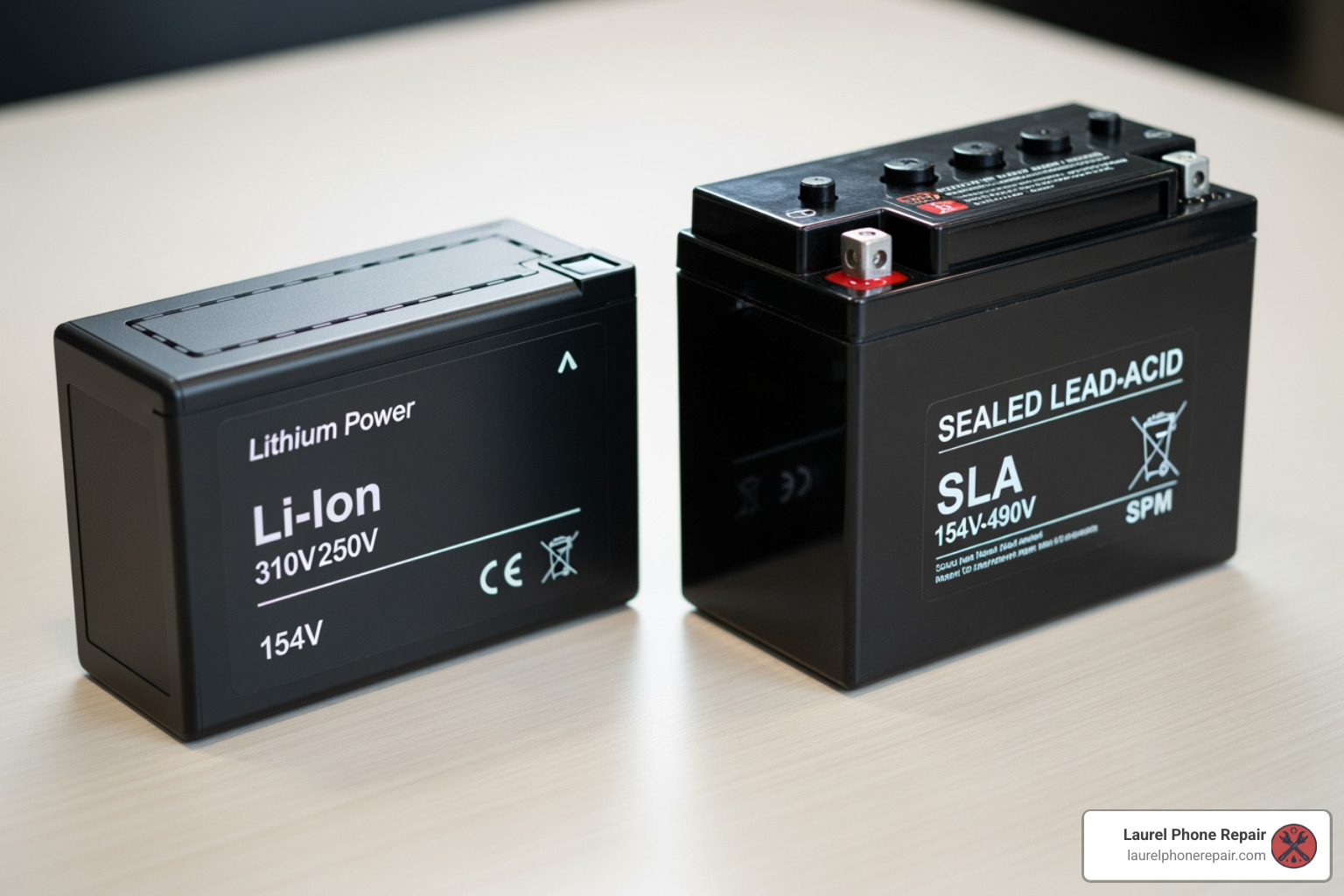
- Voltage (V): This is perhaps the most critical specification. Most modern electric scooters use lithium-ion battery packs, typically ranging from 24V to 60V. Your replacement battery must match the original battery’s voltage exactly. Using a battery with the wrong voltage can damage your scooter’s motor and controller. You’ll usually find the voltage printed on your current battery or in your scooter’s user manual.
- Capacity (Ah or Wh): Capacity determines your scooter’s range.
- Amp-hours (Ah): This measures how much current the battery can deliver over a certain time. A 10Ah battery can deliver 10 amps for one hour, or 1 amp for 10 hours.
- Watt-hours (Wh): This is a more direct measure of total energy, calculated as Voltage (V) x Amp-hours (Ah). Higher capacity (Ah or Wh) in an electric scooter battery generally means a longer range. You can often upgrade to a slightly higher Ah rating if the physical dimensions and voltage remain the same, potentially increasing your range without affecting other components. However, always ensure the physical size allows for the upgrade.
- Physical Dimensions: This might seem obvious, but a new battery won’t do you any good if it doesn’t physically fit in your scooter’s battery compartment. Measure your old battery’s length, width, and height carefully. While some models allow for slight variations, a snug fit is often necessary for safety and stability.
- Connector Type: Batteries connect to your scooter’s electrical system via specific connectors. These can vary widely, from simple spade terminals to multi-pin plugs. Make sure your new battery has the same connector type as your old one, or be prepared to adapt it (though we recommend matching directly to avoid complications). Taking a photo of the connector on your old battery before ordering is a smart move.
- Controller Compatibility: This is particularly relevant if you’re considering an upgrade. Your scooter’s controller manages power flow from the battery to the motor. While voltage and capacity are generally flexible for upgrades within reason, some controllers have limitations on current draw. If you significantly increase the battery’s capacity or power output, ensure your controller can handle it. This is a point where professional advice can be invaluable.
OEM vs. Third-Party and Upgrades
When it comes to sourcing your new battery, you’ll generally encounter three main categories:
| Feature | Original Equipment Manufacturer (OEM) Batteries | Third-Party Compatible Batteries | Upgrade Batteries (Third-Party) |
|---|---|---|---|
| Cost | Highest | Moderate to Low | Moderate to High (depending on capacity increase) |
| Compatibility | Guaranteed perfect fit and function | Variable; requires careful checking of specs and reviews | Requires careful checking of specs, dimensions, and controller compatibility |
| Warranty | Typically covered by scooter manufacturer’s warranty | Varies by manufacturer; look for reputable brands with good warranties | Varies; often from specialized aftermarket providers |
| Performance | Matches original performance | Can match or slightly vary from original; quality varies | Aims to exceed original performance (e.g., increased range, higher speed) |
| Safety | Designed to meet manufacturer’s safety standards | Quality varies; reputable brands have good safety features | Quality varies; ensure robust BMS (Battery Management System) and protection features |
| Availability | Directly from scooter manufacturer or authorized dealers | Widely available online and from specialty battery retailers | Available from specialized e-scooter parts suppliers |
- Original Equipment Manufacturer (OEM) Batteries: These are batteries made by or specifically for your scooter’s brand.
- Pros: Guaranteed compatibility, often the safest choice, and maintains the scooter’s original performance. If your scooter is still under warranty, using an OEM battery might be required to keep the warranty valid.
- Cons: Often the most expensive option.
- Third-Party Compatible Batteries: These are batteries produced by other companies that are designed to work with various scooter models.
- Pros: Generally more affordable than OEM batteries. A wider selection of capacities might be available.
- Cons: Quality can vary significantly. It’s crucial to research the manufacturer, read reviews, and ensure the battery meets all the key specifications (voltage, capacity, dimensions, connector type). A cheap, low-quality third-party battery can be a fire hazard or simply fail quickly.
- Upgrade Batteries: Often a type of third-party battery, these are designed to offer better performance than your scooter’s original battery, such as increased range or higher speed.
- Pros: Can significantly improve your riding experience, extending your adventures or making your commute more efficient.
- Cons: Requires the most careful consideration. You must ensure the physical dimensions allow for the larger capacity, and more importantly, that your scooter’s controller and motor can handle the increased power output. Without proper compatibility, you risk damaging your scooter or, worse, creating a safety hazard. We always recommend consulting with professionals like us if you’re considering a performance upgrade, as modifications might be necessary.
A Step-by-Step Guide to Scooter Battery Replacement
Ready to get your hands dirty? Replacing your electric scooter battery can be a rewarding DIY project, but it’s crucial to prioritize safety and follow instructions carefully. Think of us as your pit crew, guiding you through every step!
Tools and Safety Precautions
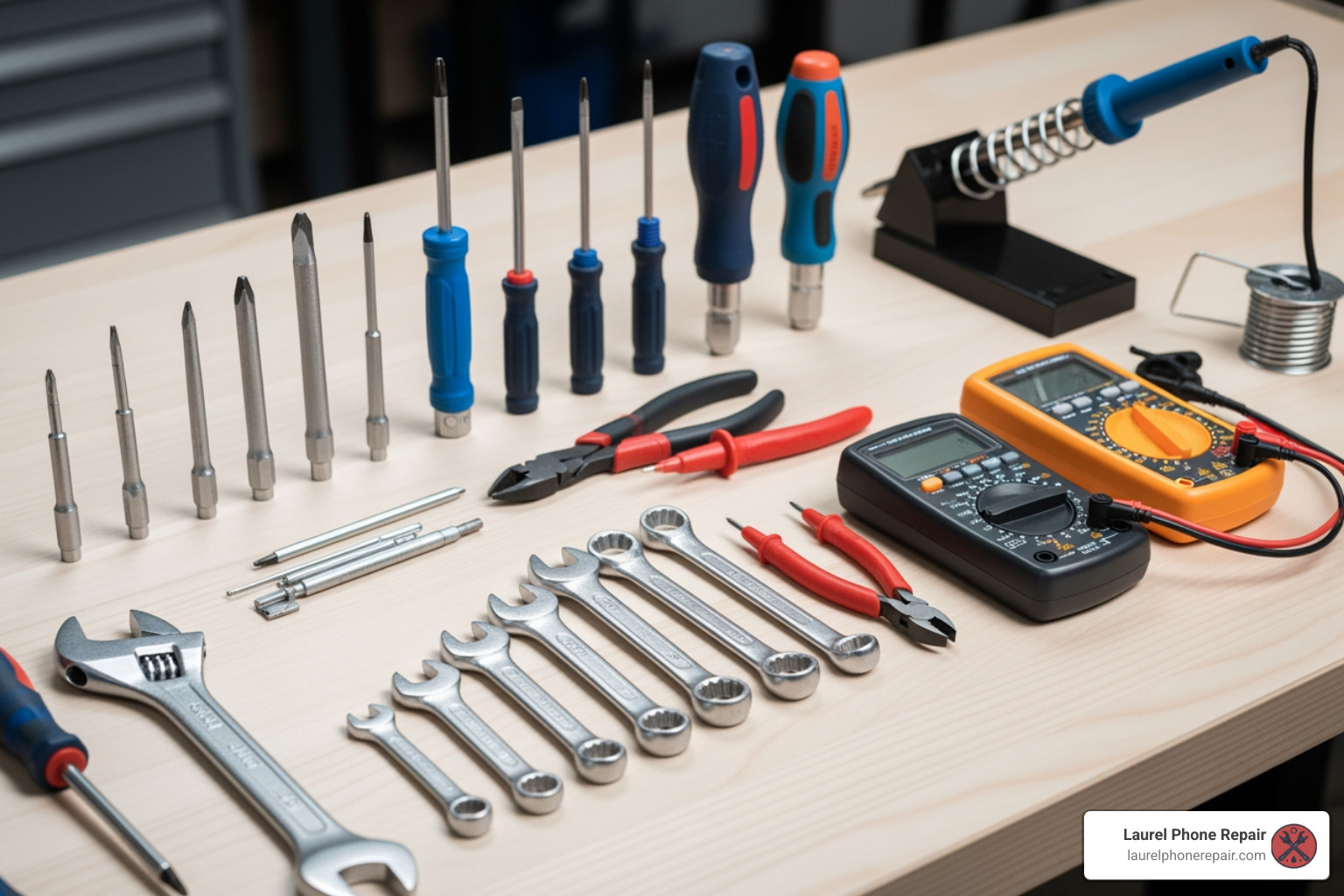
Before you begin, gather your gear. Having the right tools makes the job smoother and safer.
-
Necessary Tools:
- Screwdrivers: You’ll likely need a Phillips head and possibly a flathead. Some scooters use Torx screws.
- Wrenches or Socket Set: For bolts securing battery compartments or brackets (e.g., 5mm Allen wrench, 8mm open wrench for some Razor models).
- Pliers: Useful for disconnecting stubborn connectors or cutting zip ties.
- Safety Gloves: Protect your hands from grime and potential exposure to battery acid (especially with SLA batteries).
- Multimeter (optional but recommended): For checking battery voltage and ensuring connections are live.
- Zip ties: For tidying up wires after installation.
- Camera/Smartphone: To take photos of wiring before disconnection.
-
Safety First: This isn’t just a suggestion; it’s non-negotiable. Batteries, especially lithium-ion, store a lot of energy and can be dangerous if mishandled.
- Power Off Scooter & Disconnect Charger: Always ensure your scooter is completely powered off and disconnected from any charging cables. This eliminates the risk of electric shock and short circuits.
- Work in a Well-Ventilated Area: If you’re dealing with sealed lead-acid batteries, there’s a slight chance of gas emissions. A well-ventilated space is always a good idea.
- Avoid Short-Circuiting Terminals: Never let metal tools or objects touch both battery terminals simultaneously. This can cause sparks, heat, and damage the battery or yourself.
- Handle with Care: Batteries can be heavy. Lift and move them carefully to avoid dropping them or damaging connectors. If you encounter a swollen or leaking battery, handle it with extreme caution and refer to the disposal section immediately.
The Safe Removal and Installation Process for a scooter battery replacement
While specific steps can vary slightly between scooter models (always consult your scooter’s manual first!), this general guide covers the core process.
- Locate Battery Compartment: Most electric scooter batteries are housed under the deck, within the stem, or sometimes in a removable external pack. Check your user manual if you’re unsure. You might need to flip the scooter over to access the underside of the deck.
- Remove Deck or Cover: Using your screwdrivers or wrenches, carefully remove the screws, latches, or brackets that secure the battery compartment cover or the scooter’s deck. Keep all screws and small parts in a safe place so they don’t go on an adventure without you!
- Photograph Wire Connections: This is a crucial step! Before disconnecting anything, take clear photos of how the wires are connected to the old battery and the scooter’s control module. This visual reference will be your best friend during reassembly.
- Disconnect Old Battery: Carefully disconnect the wires or connectors attached to the old battery. There might be clips or tabs you need to depress. Remember the “red to red, black to black” rule – positive to positive, negative to negative. If you’re dealing with multiple batteries in a pack (common for SLA scooters), note their series or parallel connections. When replacing electric scooter batteries, it’s advised to replace all batteries at the same time and with the same brand to avoid compatibility issues and internal oxidation.
- Remove Battery Pack: Gently lift and remove the old battery from its compartment. If it’s tightly packed, you might need to carefully pry it out, but avoid forcing it. If it’s stuck, a little WD-40 on the sides might help loosen it, as suggested for some models.
- Install New Battery: Place the new battery into the compartment, ensuring it sits snugly and oriented correctly. Double-check that its dimensions match your scooter’s requirements.
- Reconnect Wires Securely: Using your photos as a guide, connect the wires from the scooter to the new battery. Ensure all connections are firm and secure. Tug gently to confirm they won’t easily come loose. If you cut zip ties during removal, use new ones to tidy up the wiring.
- Test the Scooter: Before fully reassembling, it’s a good idea to perform a quick test. Turn the scooter on (if safe to do so with the compartment open) to ensure it powers up and shows a charge. Don’t ride it yet, just check basic functionality.
- Reassemble Scooter: Carefully replace the battery compartment cover or deck, securing all screws, latches, or brackets. Ensure everything is tight and flush.
How to Responsibly Dispose of Your Old Battery
An old battery is not just trash; it’s an environmental hazard and contains valuable materials that can be recycled. Proper disposal is essential for our planet and for your safety.
- Environmental Hazard: Both lithium-ion and sealed lead-acid (SLA) batteries contain chemicals and heavy metals that are harmful if released into the environment. They should never be thrown in regular household trash.
- Lithium-ion Recycling: Lithium-ion batteries contain valuable materials that can be recovered. Many electronics stores and specialized recycling centers accept them.
- Sealed Lead-Acid (SLA) Recycling: SLA batteries are particularly heavy due to lead content and are highly recyclable. Most auto parts stores will accept old lead-acid batteries for recycling.
- Prohibited Disposal Methods: Laws in many states, including Mississippi, prohibit throwing lead-acid batteries in municipal waste. Incineration or landfilling is also generally prohibited.
- Find a Battery Recycling Center Near You: The easiest way to find a responsible disposal location is to use online resources. For an interactive online map with over 30,000 electric scooter and bicycle battery drop-off locations in the USA and Canada, please visit: www.Call2Recycle.com
Extending Your New Battery’s Lifespan
You’ve invested in a new battery; now let’s make sure it lasts! Proper care and smart habits can significantly extend your battery’s useful life, keeping you zipping around Laurel, Hattiesburg, and Jackson, Mississippi, for longer.
Best Practices for Charging and Storing
Your charging and storage habits are key determinants of battery longevity.
- Use the Correct Charger: Always use the charger specifically designed for your scooter’s battery. An incompatible charger can lead to overcharging, undercharging, or even fire.
- Avoid Extreme Temperatures: Batteries hate extreme heat and cold. Avoid charging or storing your scooter in direct sunlight, hot cars, or freezing conditions. The ideal storage temperature for batteries is generally between -10°F and 75°F.
- Don’t Leave on Charger for Days: While modern chargers often have overcharge protection, continuously leaving a lithium-ion battery at 100% charge can stress the cells over time. Charge it, then unplug it. Never charge longer than 30 hours for SLA batteries, and for new SLA batteries, charge for at least 18 hours before first use.
- Charge After Every Ride: For optimal lifespan, recharge your battery after every ride, even short ones. This prevents the battery from sitting in a partially discharged state for extended periods, which can lower its useful lifespan. After long rides, wait about 30 minutes for the batteries to cool down before recharging.
- Store at 50-60% for Long Periods: If you plan to store your scooter for more than a few weeks (e.g., over the winter), charge the battery to about 50-60% capacity. This is the sweet spot for long-term storage of lithium-ion batteries.
- Recharge Monthly in Storage: When storing your electric scooter, especially for several months, recharging the battery every month is recommended. If scooter batteries are not recharged every 30 days, they will internally oxidize, leading to a shortened lifespan and reduced mileage range. It’s like giving your battery a little sip of energy to keep it healthy.
Riding Habits That Save Battery Life
Your riding style also plays a significant role in how quickly your battery degrades and how far it can take you on a single charge.
- Smooth Acceleration: Aggressive acceleration draws a lot of power from the battery quickly. Smooth, gradual acceleration is more energy-efficient and puts less stress on the battery.
- Use Eco-Mode: Many scooters have an “eco-mode” or lower power settings. Using these modes, especially for casual cruising or when you don’t need maximum speed, will conserve battery life and extend your range.
- Maintain Proper Tire Pressure: Underinflated tires create more rolling resistance, forcing your motor (and battery) to work harder. Check your tire pressure regularly and keep them inflated to the manufacturer’s recommended level. This simple tip can make a surprising difference!
- Avoid Heavy Loads: While scooters are designed to carry a certain weight, consistently riding with heavy loads (e.g., a backpack full of groceries, or two riders if not designed for it) will drain the battery faster.
- Reduce Stop-and-Go Riding: Frequent braking and acceleration consume more energy than maintaining a consistent speed. If possible, plan your routes to minimize stop-and-go traffic.
When to Seek Professional Help
While we empower our customers with how-to guides for many repairs, we also know when it’s best to call in the pros. Sometimes, a scooter battery replacement isn’t as straightforward as it seems, or you might simply prefer expert handling.
- Complex Wiring or Custom Battery Packs: Some high-performance or older scooters can have intricate wiring or custom-built battery packs that require specialized knowledge to safely handle. If your scooter’s internal setup looks like a spaghetti monster, it might be time to step back.
- Lack of Tools or Confidence: Don’t have the right tools? Or perhaps you’re just not comfortable working with electrical components, especially high-voltage batteries? That’s perfectly fine! Safety should always be your top priority. Attempting a DIY repair without the right equipment or confidence can lead to damage to your scooter or, more importantly, injury to yourself.
- Warranty Concerns: If your electric scooter is still under warranty, performing a DIY battery replacement might void it. Always check your manufacturer’s warranty policy before undertaking any repairs yourself.
- Persistent Issues After DIY Attempt: If you’ve tried replacing the battery and your scooter is still acting up, it could indicate a deeper problem with the motor, controller, or other electronic components. Our experienced technicians at Laurel Phone Repair specialize in device diagnostics and repair, and we can help you get to the bottom of it.
For all these reasons and more, our team at Laurel Phone Repair is here to help. We have experienced technicians across our locations in Laurel, Hattiesburg, Jackson, and Jones County, Mississippi, ready to tackle even the trickiest scooter battery replacement or repair. We offer transparent part options (OEM vs. aftermarket) and stand by our work with high customer satisfaction and warranties.
Don’t hesitate to schedule a professional repair with us. We’ll get your scooter back on the road safely and efficiently.
Conclusion
We’ve covered a lot of ground today, from identifying the tell-tale signs of a failing power pack to the nitty-gritty of scooter battery replacement.
Here are the key takeaways:
- Listen to Your Scooter: Reduced range, inconsistent power, extended charging times, and especially physical swelling are all urgent calls for a new battery.
- Match Your Specs: Always prioritize matching voltage, capacity (or upgrading wisely), physical dimensions, and connector type when choosing a replacement.
- Safety is Paramount: Always power off, disconnect, and handle batteries with care. Never short-circuit terminals.
- Dispose Responsibly: Old batteries are not trash! Use recycling programs like Call2Recycle.com to protect our environment.
- Nurture Your New Battery: Smart charging, proper storage, and mindful riding habits will ensure your new power pack lives a long and happy life.
- Know When to Call for Backup: If the task feels too daunting, the wiring too complex, or warranty concerns are at play, our professional technicians are always here to help.
Whether you choose the DIY satisfaction of replacing your scooter’s battery yourself or opt for our expert support, we hope this guide empowers you to keep your electric scooter running smoothly. For expert help with your scooter battery replacement and other electronic repairs, trust our team to get you back on the road.
Learn more about our Battery Repair services