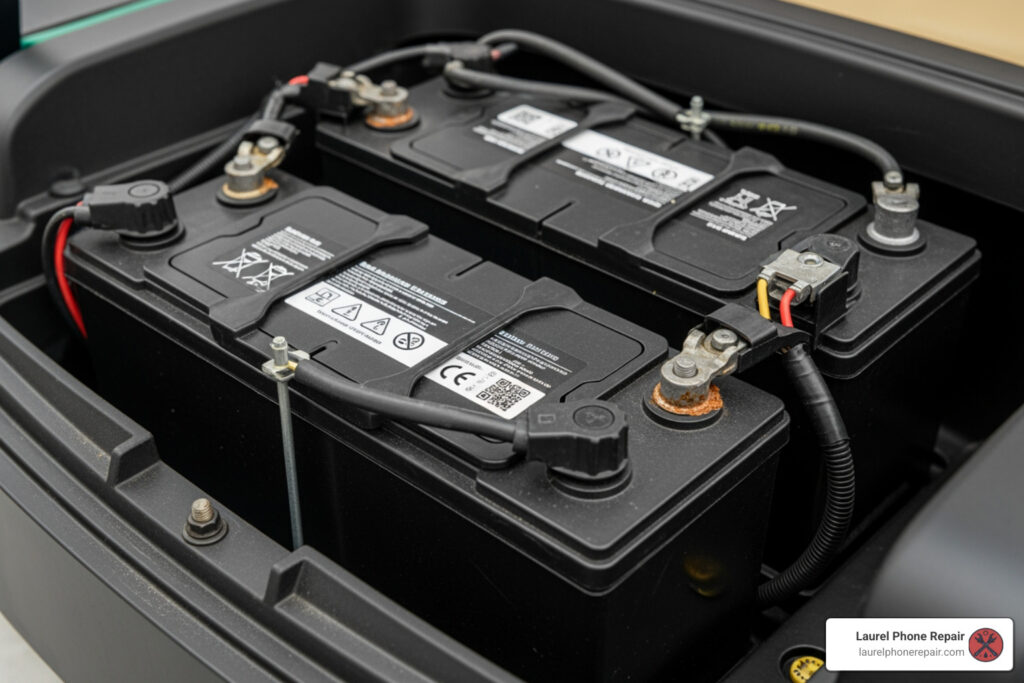
Golf cart battery service: Ultimate 5-Step Guide
Why Golf Cart Battery Service is Essential for Reliable Performance
Golf cart battery service is the key to keeping your cart running smoothly and avoiding unexpected breakdowns. Whether you use your golf cart for golfing, getting around your community, or working on your property, proper battery maintenance ensures reliable performance and extends the life of your investment.
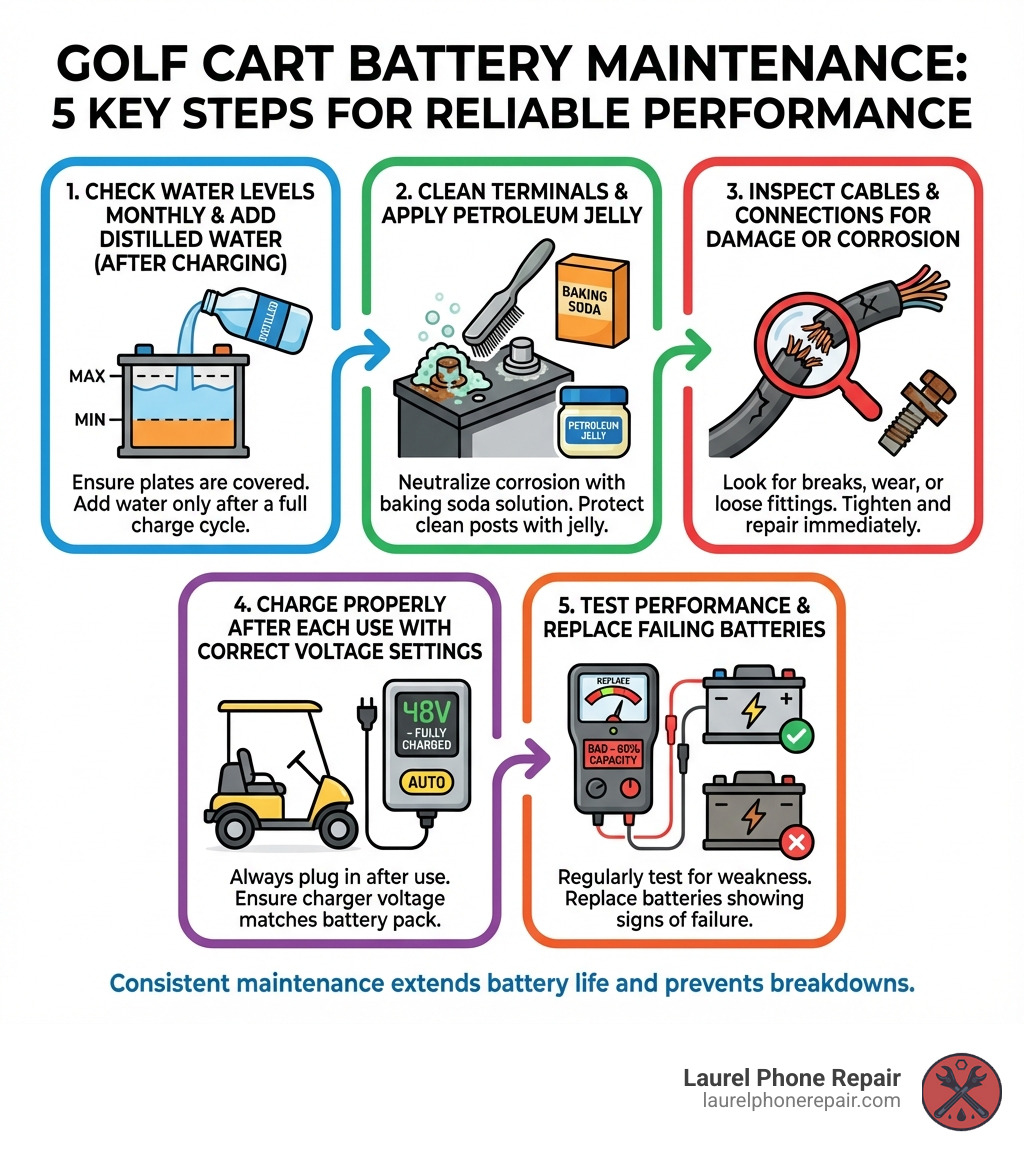
Quick Answer: What Golf Cart Battery Service Includes
- Checking water levels in flooded lead-acid batteries (monthly)
- Cleaning terminals and connections to prevent corrosion
- Inspecting cables for damage, cracks, or wear
- Charging properly after each use with the correct voltage
- Testing performance to identify failing batteries early
Let’s face it: golf cart batteries aren’t cheap. A new set of 4-6 batteries can cost hundreds or even thousands of dollars. But here’s the good news – proper maintenance can extend your battery life from 4-5 years to 6-8 years, saving you significant money over time. More importantly, regular service prevents you from getting stranded mid-round or mid-commute.
The average battery life varies dramatically based on care. With heavy use (8+ hours daily) and no maintenance, batteries might only last 2-4 years. However, batteries that receive consistent attention can perform reliably for much longer. That’s a difference of thousands of dollars and countless hours of dependable service.
I’m Ralph Harris, and with over 20 years of experience in electronics repair, I’ve serviced hundreds of battery systems across various applications, including golf cart battery service for both residential and commercial clients. Through this guide, I’ll show you exactly how to maintain your batteries and when professional service makes sense.
Signs Your Battery Needs Service or Replacement
Your golf cart often gives subtle clues when its batteries are struggling. Ignoring these warnings can lead to a complete breakdown, leaving you stranded. Recognizing these signs early means you can address issues before they become major problems, potentially saving you from needing a full battery replacement.
Here are the most common indicators that your golf cart battery needs service or replacement:
- Reduced Cart Speed: If your cart isn’t zipping along like it used to, or struggles to reach its top speed, weak batteries are often the culprit.
- Shorter Range Per Charge: Are you finding yourself needing to charge more frequently, or does your cart die sooner than expected? This is a classic sign of declining battery capacity.
- Slow Acceleration: If your cart feels sluggish when you press the pedal, struggling to get up to speed, the batteries might not be delivering enough power.
- Dimming Lights or Accessories: Headlights, taillights, or other electrical accessories that appear dim or flicker, especially under load, indicate a lack of consistent power from the battery bank.
- Swollen or Cracked Battery Cases: This is a serious sign of internal damage, often caused by overcharging or extreme heat. Swollen batteries are dangerous and should be handled with extreme caution and replaced immediately.
- Leaking Acid: Any visible liquid around the battery terminals or on the battery tops points to a leak. Battery acid is corrosive and dangerous, and a leaking battery is a clear sign it needs immediate attention and replacement.
- Batteries Older Than 4 Years: While some batteries can last 6-8 years with excellent care, batteries older than 4 years tend to fail faster. If your lead-acid batteries are approaching or past this age and you’re noticing performance issues, it’s a strong indicator that replacement is nearing. For expert diagnosis and solutions, check out our more info about battery repair services.
Visual Inspection Checklist
A quick visual check can reveal a lot about your battery’s health. We recommend making this a part of your routine golf cart battery service:
- Corrosion on terminals: A white, green, or blue powdery substance on the battery terminals indicates corrosion. This impedes electrical flow and can reduce performance.
- Frayed or damaged cables: Look for any cuts, cracks, or fraying on the battery cables. Damaged cables can lead to resistance, power loss, and even short circuits.
- Cracks in the battery casing: Even hairline cracks can allow acid to leak and moisture to enter, severely damaging the battery.
- Low water levels in lead-acid cells: For flooded lead-acid batteries, visually check that the water level covers the internal plates. If not, they need distilled water immediately.
- Bulging or swelling sides: As mentioned, this is a critical sign of internal pressure and damage. Do not attempt to charge or use a bulging battery.
Performance-Based Indicators
Beyond visual cues, your cart’s performance is a direct reflection of its battery health. Pay attention to these symptoms:
- Cart struggles on hills: If your golf cart noticeably slows down or loses power when going uphill, the batteries are likely not delivering sufficient current.
- Takes longer to charge: While charging times can vary, a significant increase in the time it takes for your batteries to reach a full charge can indicate internal resistance and declining health.
- Doesn’t hold a charge as long: If you charge your cart overnight but find it loses power quickly during use, its capacity has diminished.
- Slower than usual top speed: A gradual decrease in your cart’s maximum speed is a common sign of weakening batteries.
Here’s a list of common performance decline symptoms to watch for:
- Reduced acceleration
- Lower top speed
- Shorter driving range
- Headlights dimming at slow speeds
- Charger running longer than usual
- Unusual noises from the battery compartment (hissing, bubbling – indicating overcharging or internal issues)
The Ultimate Guide to Golf Cart Battery Service
Proper golf cart battery service isn’t just about fixing problems; it’s about preventing them. By following a routine maintenance schedule, you can significantly impact your batteries’ lifespan and ensure your golf cart performs optimally for years. Safety first! Before you begin any maintenance, make sure you understand the risks. For a comprehensive guide on battery care, you can also refer to How to Perform Golf Cart Battery Maintenance.
Essential Safety Precautions
Working with golf cart batteries involves handling corrosive chemicals and high electrical currents. Safety should always be your top priority.
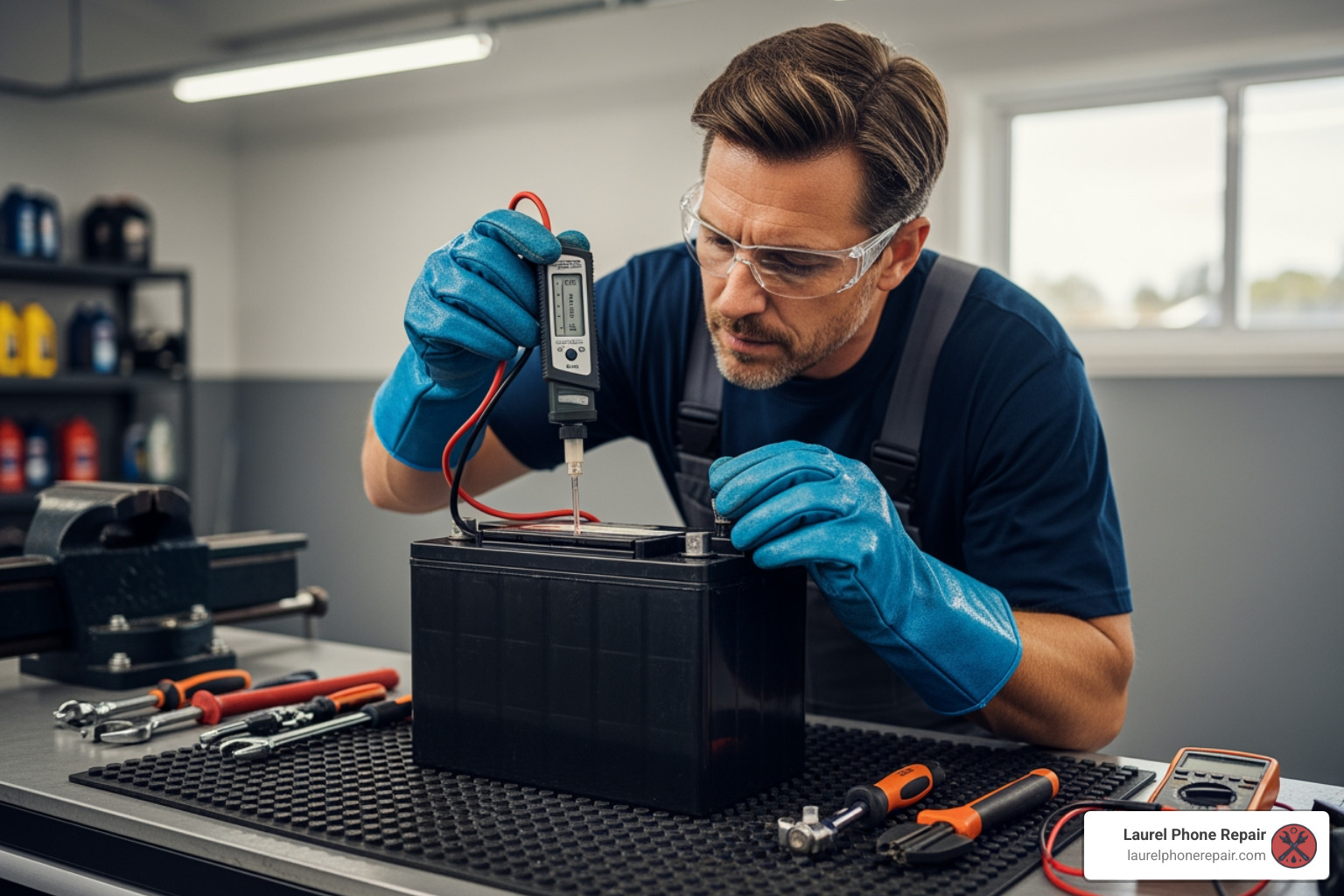
- Wear Personal Protective Equipment (PPE): Always wear safety glasses or a face shield, chemical-resistant gloves, and old clothing. Battery acid can cause severe burns and damage.
- Work in a Ventilated Area: Batteries can release hydrogen gas, which is flammable and explosive. Ensure good airflow to prevent gas buildup. Never work in an enclosed space without ventilation.
- Use Insulated Tools: Metal tools can cause a short circuit if they accidentally touch both terminals or a terminal and the cart’s frame. Use tools with insulated handles to minimize this risk.
- No Smoking or Open Flames: Keep all sparks, flames, and smoking materials away from batteries. The hydrogen gas released during charging can ignite.
- Baking Soda for Acid Spills: Keep a box of baking soda and water nearby. A solution of 1 cup of baking soda for every gallon of water can neutralize spilled battery acid. If acid gets on your skin or in your eyes, flush immediately with water for at least 15 minutes and seek medical attention.
- Disconnect Power: Before performing any maintenance, turn off your golf cart and disconnect the main battery pack from the cart. This usually involves disconnecting the negative terminal of the main battery first.
- Proper Lifting: Golf cart batteries are heavy. Use proper lifting techniques or get help to avoid injury.
For more detailed guidance on handling batteries safely, refer to this resource on More on battery safety.
Step-by-Step: Maintaining Flooded Lead-Acid Batteries
Flooded lead-acid batteries are common in golf carts and require regular attention. This routine will help maximize their lifespan and performance.
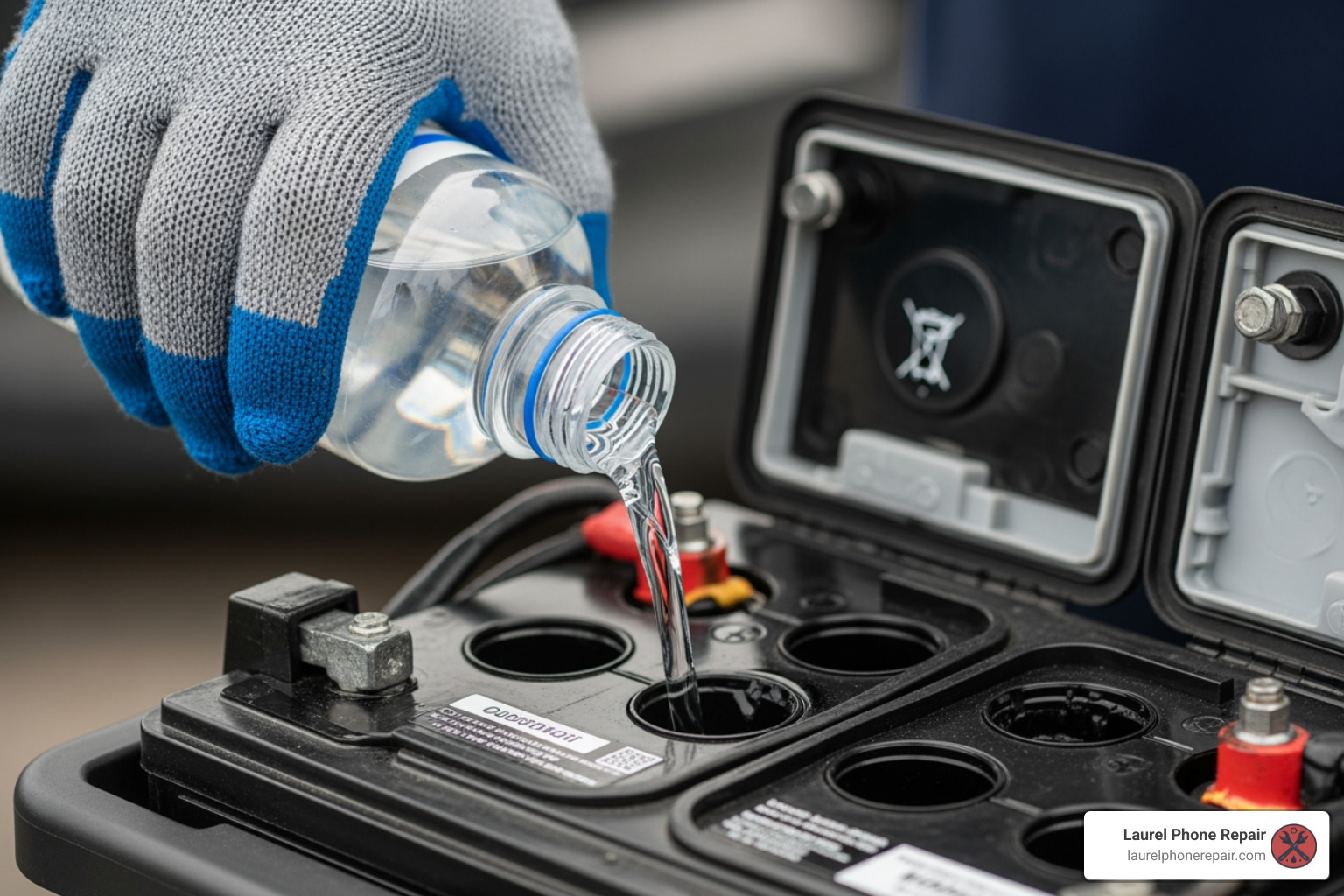
- Check Water Levels (Monthly):
- Timing is Key: Always check water levels after fully charging the batteries. However, before charging, ensure the water level is high enough to cover the plates. If the plates are exposed before charging, add just enough distilled water to cover them, then charge.
- Procedure: Open the vent caps on each battery cell. Look inside to see the electrolyte level. It should be approximately 1/8″ below the bottom of the fill well or vent cap opening once fully charged.
- Adding Water: Use only distilled or deionized water. Never use tap water, as minerals can build up and reduce battery life. Never add acid to a battery.
- Fill Level: Do not overfill! Overfilling can cause acid to overflow during charging, leading to corrosion and acid loss.
- After Filling: Securely replace and tighten all vent caps.
-
Cleaning Terminals and Connections (Every Few Months):
- Corrosion Removal: Mix a solution of 1 cup of baking soda per gallon of water. Use a stiff, non-metallic brush (like an old toothbrush) to scrub away any corrosion on the battery terminals and cable ends.
- Rinse and Dry: Rinse the area with clean water (careful not to get water into the battery cells) and thoroughly dry the terminals and cables.
- Prevent Future Corrosion: Once clean and dry, apply a thin layer of petroleum jelly, battery terminal protector spray, or a specialized anti-corrosion grease to the terminals and cable ends.
-
Checking Connections and Torque Specifications:
- Inspect Cables: Look for any signs of wear, fraying, or damage on all battery cables. Replace damaged cables immediately.
- Tighten Connections: Using an insulated wrench, ensure all battery cable connections are snug. Loose connections can create resistance, generate heat, and reduce power delivery.
- Torque Specifications: Proper torque is crucial. For 5/16” studs or bolts, aim for 100-120 in. lbs. (11.3-13.6 N-m). For 3/8” studs or bolts, the range is 120-180 in. lbs. (10-15 ft. pounds or 13.6-20.3 N-m). Overtightening can damage terminals, while undertightening causes resistance.
Maintenance Differences: Lead-Acid vs. Lithium
The world of golf cart batteries is evolving, and maintenance requirements vary significantly depending on the battery chemistry.
-
Flooded Lead-Acid Batteries: These are the traditional workhorses, known for their affordability. However, they demand the most maintenance. As detailed above, regular watering, terminal cleaning, and careful charging are essential. Their average lifespan is typically 4-5 years, though diligent care can push this to 6-8 years. They are sensitive to deep discharges and temperature fluctuations.
-
AGM (Absorbed Glass Mat) and Gel Batteries (VRLA – Valve Regulated Lead Acid): These are sealed lead-acid batteries, meaning they require no watering. This makes them “maintenance-free” in that regard, though they still benefit from clean terminals and proper charging. They are less prone to spilling and can be mounted in various orientations. Their lifespan is often similar to or slightly better than flooded lead-acid, but they are more sensitive to overcharging.
-
Lithium Batteries (LiFePO4): These are the game-changers in golf cart technology. Lithium batteries are virtually maintenance-free, offering a significantly longer lifespan of 5-10 years. They are lighter, charge faster, provide consistent power throughout their discharge cycle, and often come with a sophisticated Battery Management System (BMS) that protects them from overcharging, over-discharging, and temperature extremes. While the upfront cost is higher, their extended lifespan and lack of maintenance often make them more cost-effective in the long run.
Here’s a quick comparison:
| Feature | Flooded Lead-Acid Battery | Lithium (LiFePO4) Battery |
|---|---|---|
| Maintenance | High (regular watering, terminal cleaning) | Very Low (virtually none) |
| Lifespan | 4-5 years (up to 8 with excellent care) | 5-10 years |
| Performance | Power drops as charge depletes, heavier | Consistent power output, lighter, faster acceleration |
| Charging | Slower, sensitive to deep discharges, specific charge cycles | Faster, more efficient, can be partially charged |
| Upfront Cost | Lower | Higher |
| Long-Term Value | Good with maintenance | Excellent (due to lifespan, efficiency, and no maintenance) |
Understanding these differences is crucial when choosing a new battery or considering an upgrade for your golf cart. To learn more about various battery types and their specific needs, you can explore resources like our guide on mobility-scooter-battery-replacement.
Professional Service vs. DIY: Making the Right Choice
Deciding whether to tackle your golf cart battery service yourself or call in the professionals depends on several factors, including your comfort level with electrical systems, the tools you have available, and the complexity of the issue.
Benefits of Professional Golf Cart Battery Service
While routine maintenance can be a DIY task, there are times when professional help is invaluable, especially for complex diagnostics or repairs. Our expert technicians at Laurel Phone Repair in Laurel, Hattiesburg, Jackson, and Jones County, Mississippi, offer comprehensive golf cart battery services.
- Expert Diagnosis: Our technicians have the experience and specialized equipment to accurately diagnose battery issues that might not be obvious. They can perform load testing to assess battery health under real-world conditions, identify failing cells, and pinpoint problems with your charging system.
- Proper Tools and Equipment: We use professional-grade tools for testing, cleaning, and replacement, ensuring the job is done safely and correctly. This includes accurate torque wrenches, hydrometers, voltmeters, and diagnostic software for lithium systems.
- Handling Hazardous Materials: Batteries contain corrosive acids and heavy metals. Professionals are trained in the safe handling and disposal of these materials, protecting both you and the environment.
- Warranty on Service: When you choose professional golf cart battery service, our work is backed by a warranty, giving you peace of mind.
- Ensuring Correct Installation: Improper installation can lead to immediate battery failure or long-term damage. Our technicians ensure new batteries are installed correctly, all connections are secure, and your charging system is calibrated.
When DIY Maintenance Makes Sense
For the proactive golf cart owner, much of the routine golf cart battery service can be performed at home. This can save you money and keep you more connected to your cart’s health.
- Routine Watering (Flooded Lead-Acid): As detailed earlier, checking and topping off water levels is a straightforward task that most owners can handle.
- Terminal Cleaning: Removing corrosion and applying anti-corrosion agents is a simple yet effective maintenance step.
- Visual Inspections: Regularly checking for cracks, leaks, or frayed cables doesn’t require specialized tools.
- Tightening Connections: With insulated tools and proper torque specifications, ensuring tight connections is a manageable DIY job.
- Using a Battery Tender for Storage: For off-season storage, connecting a smart charger or battery tender can keep your batteries conditioned and prevent sulfation.
For those comfortable with basic repairs and maintenance, resources like our guide on scooter-battery-replacement-complete-guide can provide further insights into battery care principles that apply to various electric vehicles.
Choosing and Replacing Your Golf Cart Batteries
Eventually, even the best-maintained batteries will need replacement. Knowing when and how to choose new batteries is critical for your golf cart’s continued performance.
Key Factors for Choosing a New Battery
When it’s time to replace your golf cart batteries, several factors will guide your decision:
- Voltage (6V, 8V, 12V): Your golf cart’s battery system is designed for a specific total voltage (e.g., 36V or 48V). This is achieved by connecting multiple batteries in series. For example, a 48V system might use six 8-volt batteries or four 12-volt batteries. Always replace with batteries of the correct individual voltage to match your cart’s system.
- Amp-Hour (Ah) Rating: The Amp-hour rating indicates how much energy the battery can store and deliver over time. A higher Ah rating generally means a longer run time or range for your golf cart. Consider your usage patterns: do you need maximum range, or is shorter, lighter use more common?
- Battery Chemistry (Lead-Acid, AGM, Lithium):
- Lead-Acid (Flooded): Most affordable upfront, but requires regular maintenance.
- AGM/Gel: Sealed, maintenance-free (no watering), but typically more expensive than flooded.
- Lithium (LiFePO4): Highest upfront cost, but longest lifespan, maintenance-free, lighter, faster charging, and consistent power. This is often the best long-term value.
- Physical Size and Terminal Type: Batteries must fit securely in your cart’s battery trays and have compatible terminal types for your cables. Measure your existing batteries and note terminal configurations (e.g., automotive post, stud).
- Brand Reputation: Stick with reputable battery brands known for quality and reliability. Brands like Trojan, US Battery, Exide, and Deka have long been trusted in the golf cart industry.
Understanding the Costs of Golf Cart Battery Service and Replacement
The costs associated with golf cart battery service and replacement can vary widely depending on the type of service, battery chemistry, and whether you opt for DIY or professional help.
- Cost of a New Battery Set: A complete set of new flooded lead-acid batteries for a typical 36V or 48V golf cart can range from $600 to $1,500. Lithium battery conversion kits, while more expensive upfront, typically start around $1,500 and can go up to $3,000 or more, but offer significant long-term savings due to their lifespan and efficiency.
- Labor Costs for Professional Installation: If you opt for professional installation, you’ll incur labor charges. This typically includes removing old batteries, cleaning the battery compartment, installing new batteries, and ensuring all connections are correct and torqued to specification.
- Price of Reconditioned Batteries: Some providers offer reconditioned batteries as a more cost-effective alternative to new ones. These can save money and extend the life of a set, but their lifespan can be less predictable than new batteries. It’s crucial to ensure they come with a warranty and are from a reputable source if considering this option.
- Long-Term Cost of Lithium vs. Lead-Acid: While lithium batteries have a higher initial price tag, their longer lifespan (5-10 years vs. 4-5 years for lead-acid), lack of maintenance, faster charging, and consistent performance often result in a lower total cost of ownership over the life of your golf cart. You might replace lead-acid batteries two or three times for every one set of lithium batteries.
For those interested in understanding the economics of battery replacement in other electric vehicles, our article on chevy-volt-battery-replacement offers further insights into the costs involved in larger-scale battery systems.
Frequently Asked Questions about Battery Care
Here are some of the most common questions we hear regarding golf cart battery service and maintenance:
How often should I check my golf cart batteries?
For flooded lead-acid batteries, a visual inspection and water level check should be done monthly. In hot climates or with heavy use, you might need to check more frequently. Connections should be checked and tightened every few months. Lithium batteries, on the other hand, require minimal to no regular checks due to their sealed nature and internal Battery Management Systems (BMS).
What kind of water should I use in my batteries?
Only use distilled or deionized water. Tap water contains minerals (like calcium and magnesium) that can build up on the battery plates, reducing capacity, interfering with chemical reactions, and ultimately shortening the battery’s lifespan. Never use acid or tap water to top off your batteries.
Can I replace just one dead battery in a set?
It is generally not recommended to replace just one dead battery in a set, especially if the other batteries are more than a year or two old. When a new battery is introduced to an older set, its capacity will be much higher than the remaining batteries. This creates an imbalance where the new battery works harder and the older batteries may pull down its performance. The new battery will quickly deteriorate to the level of the old ones, and the overall performance of the set will be poor. If more than two or three batteries have failed, we always recommend replacing the entire set to ensure balanced performance and maximum lifespan for your investment.
Conclusion
Regular golf cart battery service is not just a chore; it’s an investment that pays dividends in reliability, performance, and significant cost savings. By understanding the signs of battery trouble, following proper maintenance procedures for your battery type, and making informed decisions about replacements, you can ensure your golf cart runs smoothly for years to come.
Remember the benefits: a longer battery lifespan means less frequent, expensive replacements. Better performance ensures you’re never stranded and always have the power you need. And ultimately, smart maintenance saves you money over the long haul.
For complex diagnostics, professional installation, or when you need expert battery repair that goes beyond DIY capabilities, trust the experienced technicians at Laurel Phone Repair. We’re here to get you back on the course or cruising through your community safely and efficiently. Visit us in Laurel, Hattiesburg, Jackson, or Jones County, Mississippi, for all your golf cart battery needs.