
Device Repair with Warranty: Your Ultimate 2025 Guide
Why Understanding Device Repair with Warranty Matters
Device repair with warranty can save you hundreds of dollars—or cost you more if you don’t understand what’s actually covered. Here’s what you need to know right now:
Quick Answer: Your Warranty Coverage
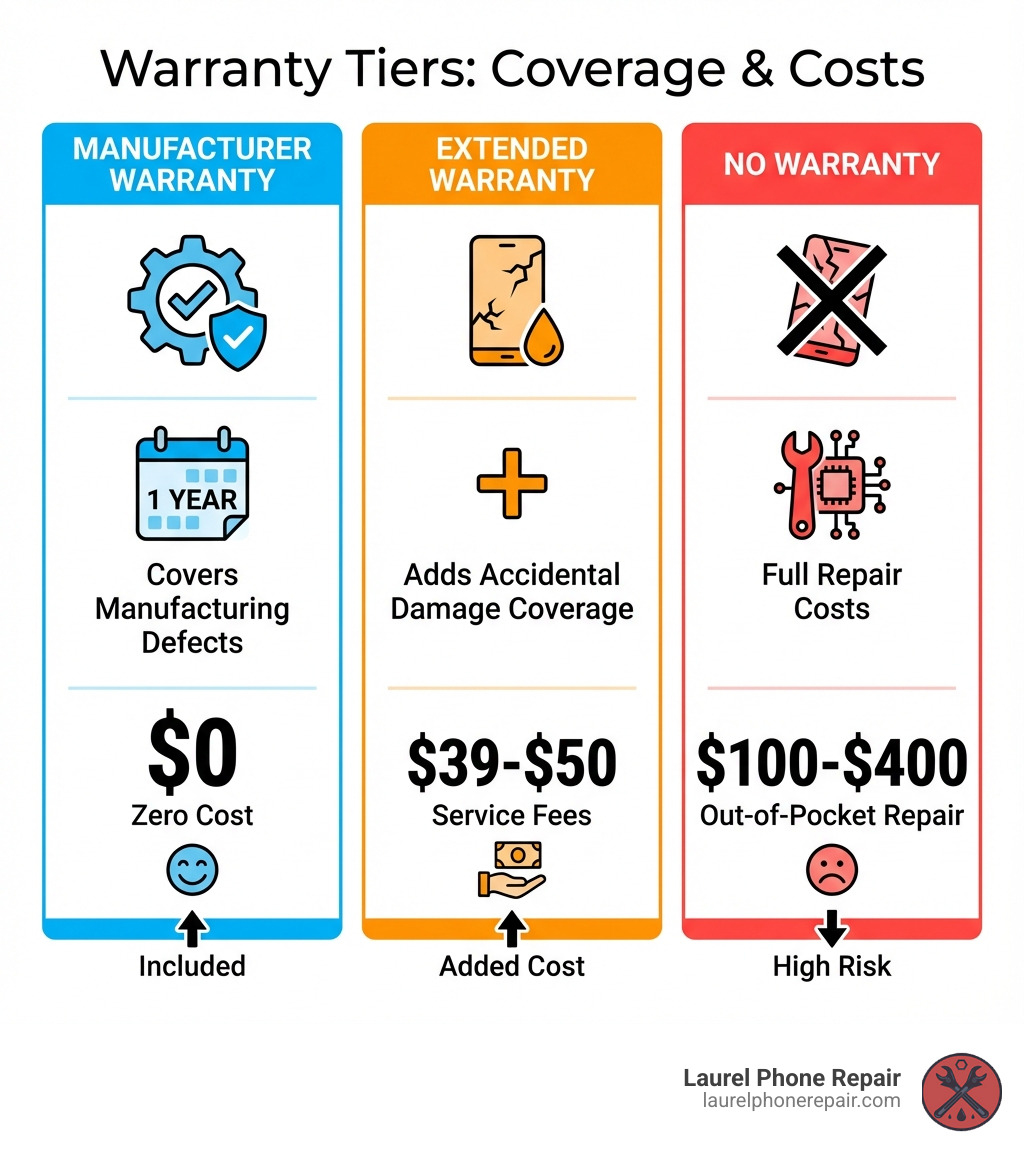
- Standard Manufacturer Warranty: Covers manufacturing defects and hardware failures for 1 year. Does NOT cover accidental damage, liquid damage, or normal battery wear.
- Extended Warranty/Protection Plans: Add coverage for accidental damage and mechanical failures after the manufacturer warranty expires. Usually require service fees ($39-$50+ per claim).
- Repair Options: Manufacturer/authorized centers use genuine parts but cost more. Third-party shops offer faster, cheaper service but may void your original warranty.
- After Repair: Your repaired or replaced device is typically covered for 90 days or the remainder of your original warranty—whichever is longer.
When your phone won’t turn on or your tablet screen shatters, the last thing you want is a surprise repair bill. Yet most people don’t actually read their warranty documents until something breaks. The reality is stark: accidental damage isn’t covered by standard warranties, normal battery degradation isn’t covered, and even some manufacturing defects might be excluded if you’ve used unauthorized repair shops.
The repair landscape has changed dramatically. You now have multiple options—from mailing your device to the manufacturer for a 7-10 business day turnaround, to walking into an authorized service center for same-day repairs, to choosing a local third-party shop that might fix your screen in an hour. Each option affects your warranty status differently.
Some warranties, like those from certain repair chains, only apply if you maintain service with specific carriers. Others, like manufacturer-offered extended plans, let you file up to two accidental damage claims per year for a service fee. Refurbished devices come with just 90 days of coverage instead of a full year. And if you attempt repairs yourself or visit an unauthorized shop, you might void your coverage entirely.
I’m Ralph Harris, and over my 20+ years in electronics repair and technical writing, I’ve seen thousands of warranty claims—both approved and denied—which gives me unique insight into navigating device repair with warranty successfully. Understanding these rules before your device breaks is the difference between a free repair and a $300 bill.
Decoding Your Standard Manufacturer’s Warranty
Your device’s manufacturer warranty is the first line of defense against unexpected issues. It’s automatically included with your purchase, typically covering the device for a set period from the original purchase date. Think of it as a quality assurance promise from the company that made your phone, tablet, or computer.
Most standard manufacturer warranties, such as those from major smartphone and computer brands, are designed to protect you from defects that originated during the manufacturing process. This means if something goes wrong due to a flaw in parts or workmanship, the manufacturer is usually obligated to repair or replace your device.
However, these warranties are very specific about what they cover—and, more importantly, what they don’t. For instance, a refurbished item purchased directly from a retailer often comes with a much shorter warranty, sometimes just 90 days, rather than the full original period. Even if your device is repaired or replaced under warranty, the coverage for that new or repaired unit is typically limited to the longer of the original warranty period remaining or 90 days. It’s a bit like getting a fresh start, but not a full reset on your warranty clock!
It’s also worth noting that consumer protection laws in various regions can interact with and sometimes extend or clarify manufacturer warranties. While specific laws vary by state and country, the general principle is that products should be fit for purpose and of satisfactory quality. We always advise our customers in Laurel, Hattiesburg, Jackson, and Jones County, Mississippi, to be aware of their rights. You can look up consumer laws relevant to your state or country, as the principle of consumer protection is universal. A useful general starting point is this overview of consumer protection.
What’s Typically Covered
When we talk about what’s covered under a standard manufacturer’s warranty, we’re usually looking at issues that arise through no fault of your own. These are the “oops, we messed up” moments from the factory floor.
Here’s a general rundown of what you can expect:
- Manufacturing Defects in Parts or Materials: This is the core of most warranties. If a component was faulty from the start – say, a weak solder joint or a defective chip – that causes your device to malfunction, it’s typically covered.
- Workmanship Issues Affecting Functionality: This includes problems that stem from how the device was put together. For example, if the screen wasn’t properly seated and starts to come loose, or if a button stops working due to an assembly error.
- Hardware Failure: If your device suddenly stops working, won’t power on, or consistently crashes due to an internal hardware component failure, that’s usually covered.
- Malfunctioning Buttons or Ports: If your power button gets stuck, your volume rocker stops responding, or your charging port fails to connect (and there’s no visible damage), a warranty claim is often valid.
- Connectivity Problems: Issues with your device’s Wi-Fi, Bluetooth, or cellular antenna that aren’t caused by external damage or software bugs are usually covered.
- Battery Defects (Not Degradation): If your battery is inherently faulty and swells, drains excessively fast from day one, or fails completely within the warranty period due to a manufacturing defect (not just normal aging), it may be covered.
At Laurel Phone Repair, we understand the nuances of these coverages. If you’re unsure whether your issue falls under warranty, we’re here to help you diagnose it and understand your options. For more information about how our own warranty measures up, you can always check out More info about our warranty.
What’s Almost Never Covered
Now for the less fun part: what your standard manufacturer’s warranty almost certainly won’t cover. This is where many people get tripped up, often leading to out-of-warranty repair costs. These exclusions are designed to protect manufacturers from damage caused by user error, accidents, or third-party interference.
Common exclusions include:
- Accidental Damage: This is the big one. Dropped your phone and cracked the screen? Spilled coffee on your laptop? These are considered accidental damage from handling (ADH), and standard warranties do not cover them.
- Liquid Damage: Whether it’s a quick splash or a full dunk, liquid ingress is a common warranty exclusion. Most devices have liquid damage indicators that manufacturers check, so even if it looks okay on the outside, internal corrosion will often lead to a denied claim.
- Normal Wear and Tear: Scratches on the casing, slight fading of buttons, or a charging port that’s a bit looser after two years of use are typically considered normal wear and tear and are not covered.
- Unauthorized Repairs or Alterations: This is crucial. If you attempt to fix your device yourself, or take it to a non-authorized repair shop, you risk voiding your manufacturer’s warranty entirely. Manufacturers want their certified technicians using genuine parts.
- Software Issues or Changes to Network Compatibility: Glitches caused by software updates, app conflicts, or issues related to carrier network changes are typically not covered by hardware warranties.
- Cosmetic Damage: Scratches, dents, or dings that don’t affect the device’s functionality are usually considered cosmetic and are not covered.
- Normal Battery Degradation: All batteries lose capacity over time. If your battery simply holds less charge after a year or two of regular use, that’s normal degradation and not a defect. Some extended plans might cover this if capacity drops below a certain percentage, but a standard warranty won’t.
- Misuse, Neglect, Abuse, Incorrect Operation, Improper Storage, and Acts of Nature: Basically, if you didn’t treat your device kindly, or if an act of God (like a lightning strike) damaged it, you’re usually out of luck under the standard warranty.
Understanding these exclusions can save you a lot of grief and money. If your issue falls into one of these categories, you’ll need to explore other options, such as extended warranties or professional out-of-warranty repair services.
Beyond the Basics: Extended Warranties and Protection Plans
While a standard manufacturer’s warranty is great for manufacturing defects, it leaves a gaping hole when it comes to the most common types of device damage: accidents. This is where extended warranties and protection plans come into play. These plans, often offered by manufacturers themselves (like those from major brands) or by retailers and third-party providers, are designed to fill those gaps.

These plans typically go beyond the manufacturer’s promise, covering things like accidental drops, liquid damage, and even extending coverage for mechanical failures past the initial warranty period. Many also include features like express replacement services or specialized support. For instance, major manufacturer extended plans often cover physical malfunction and liquid resistance failure, allowing for a certain number of service requests per year. Some even offer specific screen-only repair fees, which are significantly lower than full repair costs.
However, these plans aren’t a free pass. They almost always come with service fees or deductibles that you pay each time you make a claim. For example, a screen repair under an extended plan might cost you $39, while a more serious issue could be $99 or more. There are often limits on how many accidental damage claims you can make within a given period (e.g., two claims per rolling 12-month period).
Some premium plans even offer coverage for “failure to locate” a lost device, which can lead to a replacement if your device can’t be found. This is a huge benefit for those prone to misplacing their gadgets! We encourage our customers in Laurel, Hattiesburg, Jackson, and Jones County, Mississippi, to consider these plans, especially for high-value devices. You can Learn more about device protection options (English) right here.
Understanding Your Standard Device Repair with Warranty vs. Extended Plans
To help you decide if an extended plan is right for you, let’s look at a comparison of what a standard manufacturer’s warranty typically covers versus what you might get with an extended protection plan.
| Feature | Standard Manufacturer Warranty | Typical Extended Protection Plan – |
|---|---|---|
| Manufacturing Defects | Yes | Yes – |
| Accidental Damage | No (unless it’s a manufacturing defect causing the damage) | Yes (with a deductible/service fee per claim, e.g., $39 for a screen repair) – |
| Liquid Damage | No | Yes (with a deductible/service fee per claim) – |
| Normal Battery Degradation | No | Sometimes (e.g., if capacity drops below a certain percentage, like 80%) – |
| Theft/Loss | No | Rarely, but some premium plans offer “Failure to Locate” coverage leading to replacement. – |
| Repair Cost | Free (if covered by warranty) | Deductible/service fee per claim, plus monthly/annual plan cost. – |
| Duration | Typically 1 year | Varies (e.g., 2 years, or continuous monthly/annual subscription) – |
Are They Worth the Cost?
Deciding whether to invest in an extended warranty or protection plan for your device repair with warranty needs is a personal choice, but it boils down to a few key factors:
- Device Cost: For very expensive devices like high-end smartphones, laptops, or professional cameras, the cost of a single out-of-warranty repair can be astronomical. An extended plan might be a wise investment if it significantly reduces this risk.
- Repair Costs: Consider the typical cost of common repairs for your device. If a screen replacement alone costs $250-300, and an extended plan with a $39 deductible covers it, it could pay for itself with one incident.
- User Clumsiness (or “Life Happens”): Let’s be honest, some of us are just more prone to drops, spills, or other mishaps. If you’ve had a history of damaging your devices, a protection plan offers peace of mind.
- Peace of Mind: Even if you’re careful, knowing you’re covered against unforeseen accidents can be a huge relief. This intangible benefit can be worth the monthly or upfront cost for many.
- Claim Limits and Deductibles: Be aware of these. A plan might sound great, but if it only allows one claim per year and has a high deductible, its value might diminish.
- Device Longevity: For those who keep their devices for several years, an extended warranty can ensure your gadget remains functional long after the manufacturer’s warranty expires, covering mechanical breakdowns that might occur in years two or three.
The value of an extended plan depends on your individual risk tolerance and budget. For our part, at Laurel Phone Repair, we focus on providing affordable, transparent repair options for everyone, whether your device is covered by a warranty or not. We believe in empowering you with choices that make sense for your wallet and your tech. You can learn more about our repair services and how we can help you keep your devices running smoothly at More info about our repair services.
Your Options for Device Repair with Warranty
When your device needs fixing, you’re not stuck with just one choice. The world of device repair with warranty offers several pathways, each with its own advantages and disadvantages. Understanding these options will help you make an informed decision that’s best for your device, your wallet, and your peace of mind.
Generally, your options fall into three main categories: manufacturer repairs, authorized service centers, and independent third-party repair shops. There’s also the daring path of self-repair, but that’s a whole other ball game (and often voids warranties!).
Manufacturer and Authorized Repair Centers
These are the “official” channels for getting your device fixed. When you go through the manufacturer directly or one of their authorized service centers, you’re tapping into the same ecosystem that built your device.
Pros:
- Genuine Parts: This is arguably the biggest advantage. Manufacturer-certified repairs almost always use genuine, original equipment manufacturer (OEM) parts. This ensures compatibility, performance, and often, the longevity of the repair.
- Manufacturer-Certified Technicians: The technicians at these centers are specifically trained by the manufacturer on their products. They have access to proprietary tools, diagnostics, and repair procedures.
- Maintains Warranty: If your device is still under its original manufacturer’s warranty, getting it repaired through an authorized channel is crucial. It ensures your warranty remains intact for any future issues.
- Consistent Quality: You can generally expect a high standard of repair quality and a consistent process, no matter which authorized center you visit.
Cons:
- Higher Cost: Repairs at manufacturer or authorized centers can often be more expensive, especially for out-of-warranty issues, due to the cost of genuine parts and specialized labor.
- Longer Turnaround Times: While some authorized centers offer same-day service for common issues like screen repairs, mailing your device directly to the manufacturer can mean waiting 7-10 business days, or even longer, for your device to be returned.
- Limited Options for Older Devices: Manufacturers might declare older models “vintage” or “obsolete,” meaning parts and service may no longer be readily available through official channels.
Benefits of a Third-Party Shop for Device Repair with Warranty
Local, independent repair shops like ours at Laurel Phone Repair in Laurel, Hattiesburg, Jackson, and Jones County, Mississippi, offer a compelling alternative, especially for out-of-warranty repairs or when speed and cost are top priorities.
Pros:
- Lower Cost: Third-party shops can often offer more competitive pricing for repairs. This is partly due to lower overheads and the ability to source parts from various suppliers, not just the manufacturer.
- Faster Service: Many common repairs, like screen replacements or battery swaps, can often be completed on the same day, sometimes even within an hour or two. We pride ourselves on quick, efficient service.
- Multiple Part Options (OEM vs. Aftermarket): A key benefit of our service at Laurel Phone Repair is transparency regarding parts. We can offer you choices between OEM-quality parts (parts that meet original manufacturer specifications) or high-quality aftermarket parts, allowing you to balance cost and performance. This is a unique advantage that manufacturers typically don’t provide.
- Personalized Service: You often get a more direct and personalized experience at a local shop. Our experienced technicians can talk you through the repair process, answer your questions, and offer custom advice.
- Free Diagnostics: Most reputable third-party shops, including ours, offer free, no-obligation diagnostics to assess your device’s issue before you commit to a repair.
- Local Warranty on Repairs: While a third-party repair might void your manufacturer’s warranty, we stand behind our work. At Laurel Phone Repair, we offer a comprehensive warranty on all parts and labor, giving you peace of mind on our repairs. You can find More info about our repair process on our website.
Cons:
- May Void Original Manufacturer Warranty: This is the primary drawback. If your device is still under its manufacturer’s warranty, using a third-party repair shop will likely void that coverage. This is a trade-off you need to weigh carefully.
- Part Quality Varies: Unlike manufacturer-authorized centers, part quality can vary widely among third-party shops. It’s essential to choose a reputable shop that offers transparent part options and stands behind their work, like Laurel Phone Repair. We ensure our parts meet high standards, whether OEM-quality or aftermarket.
The Repair Playbook: From Claim to Completion
So, your device is acting up, and you’ve decided on your repair path. Now what? Navigating the repair process, especially when dealing with a device repair with warranty, involves a few critical steps. Preparation is key to a smooth experience and to protecting your valuable data.
Steps to Take Before Sending Your Device for Repair
This is perhaps the most important stage, regardless of where you send your device. Skipping these steps can lead to data loss or privacy concerns.
- Back Up Your Data: We cannot stress this enough! Whether it’s photos, contacts, documents, or apps, assume that all data on your device will be erased during the repair process. Use cloud services or connect to a computer to save everything important. For example, many manufacturers advise backing up your device-specific account before any repair.
- Factory Reset Your Device: This step protects your personal information. A factory reset wipes all data and settings, returning the device to its original factory state. If you’re sending your device to a repair center, this prevents technicians from accessing your sensitive information. For some newer devices, there’s a “Repair Mode” that allows you to protect your data without a full factory reset. If a factory reset isn’t possible due to the device’s condition, at least ensure you log out of all your accounts on the device. Your privacy is paramount; you can always review the privacy policies of the service provider to understand how your data is handled.
- Remove SIM/Memory Cards: These are often overlooked! Take out your SIM card and any external memory cards (like microSD cards). These are your property and not typically part of the repair.
- Document Device Condition: Take clear photos or videos of your device, showing its current state, especially any existing damage. This serves as proof of its condition before it leaves your hands, which can be useful if there’s any dispute about additional damage occurring during transit or repair.
- Remove Accessories: Take off cases, screen protectors, pop sockets, or any other accessories. These might not be returned to you, and they can sometimes interfere with the repair process.
Initiating a Claim and What to Expect
Once your device is prepped, it’s time to initiate the repair or warranty claim. The process varies depending on your chosen repair option:
- Contacting Support: Start by contacting the relevant support channel—the manufacturer’s customer service, your extended warranty provider, or your local repair shop (like us!). Be ready with your device’s IMEI or serial number, proof of purchase, and a clear description of the issue.
- Online Service Portals: Many manufacturers and extended warranty providers offer online portals where you can initiate a repair request, check your warranty status, and track your repair. This is often the quickest way to get the ball rolling.
- Mail-in Process: If you opt for a mail-in repair (common for manufacturer services), you’ll typically receive shipping instructions and a prepaid label. Pack your device securely, often in its original box or protective packaging. Mail-in repairs usually take 7-10 business days, excluding shipping time. Be aware that some terms, like those from manufacturer repair programs, state that all data will be erased and that replaced parts or the original device become the property of the service provider. They also often provide a 90-day warranty on the repair itself.
- Walk-in Service: For local shops like Laurel Phone Repair, walk-in service is often the fastest. Many common issues can be fixed the same day, sometimes even while you wait. It’s always a good idea to call ahead to confirm parts availability and potentially book an appointment.
- Typical Repair Time: For mail-in repairs, expect 7-10 business days once the device reaches the repair center. For walk-in repairs at a local shop, same-day service is often possible for common issues, provided parts are in stock.
- Loaner Devices: Some carriers or repair programs offer loaner devices while yours is being repaired. This can be a lifesaver, so always inquire if this is an option.
- Repair vs. Replacement: Under warranty, the manufacturer (or extended plan provider) has the discretion to either repair your device or replace it with a new or refurbished unit. Often, a replacement will be a refurbished device, which, as mentioned earlier, may come with a shorter 90-day warranty.
Conclusion
Navigating device repair with warranty can feel like deciphering a secret code, but it doesn’t have to be. We’ve seen that understanding your standard manufacturer’s warranty is crucial for covering manufacturing defects, but it falls short when life happens—those accidental drops, spills, and everyday wear and tear. That’s where extended warranties and protection plans step in, offering a safety net for those “oops” moments, albeit with their own costs and limitations.
The good news is you have options. Whether you choose the official channels of a manufacturer or the swift, personalized service of a local third-party shop like Laurel Phone Repair, being prepared is your best defense. Backing up your data, performing a factory reset, and documenting your device’s condition are non-negotiable steps that protect your privacy and ensure a smoother repair process.
The power to make informed choices rests with you. By knowing what’s covered, what’s not, and what your various repair avenues entail, you can approach any device mishap with confidence. We at Laurel Phone Repair are here to offer expert advice and transparent repair options, ensuring your devices in Laurel, Hattiesburg, Jackson, and Jones County, Mississippi, are always in top working order. For expert advice and transparent repair options in your local area, learn more about our warranty on repairs.