
Ebike battery replacement: 5 Crucial Signs Guide
Why Your E-Bike Battery is the Heart of Your Ride
Ebike battery replacement becomes necessary when your electric bike’s power source can no longer hold a charge or deliver the performance you need. Most e-bike batteries last 3-5 years or 500-1,000 charge cycles before requiring replacement. Key signs include:
- Reduced range – Your bike doesn’t travel as far on a full charge
- Slow charging – The battery takes much longer to reach full capacity
- Power cuts – The motor unexpectedly shuts off during rides
- Physical damage – Visible swelling, cracks, or leaks in the battery case
- Won’t hold charge – The battery drains rapidly even when not in use
No power for the motor means no range—on an e-bike, nothing works without the battery. Your electric bicycle battery is the heart of your ride, defining its power, range, and reliability. Over time, all lithium-ion batteries lose capacity through normal use, typically around ten percent each year. Eventually, you’ll face an important decision: should you replace your battery entirely, or explore repacking options?
Understanding when and how to replace your e-bike battery can save you hundreds of dollars while keeping your ride running smoothly. The market offers numerous options, from original manufacturer batteries to third-party alternatives, but choosing the wrong one can create safety risks or void your warranty. Temperature extremes, improper charging habits, and using incompatible chargers can all shorten battery life or create hazardous conditions.
I’m Ralph Harris, and with over 20 years of experience in electronics repair, I’ve diagnosed and replaced countless batteries across various devices, including the growing field of ebike battery replacement for customers seeking to extend their ride’s lifespan. This guide will help you identify failing batteries, understand your replacement options, and make the safest choice for your e-bike.
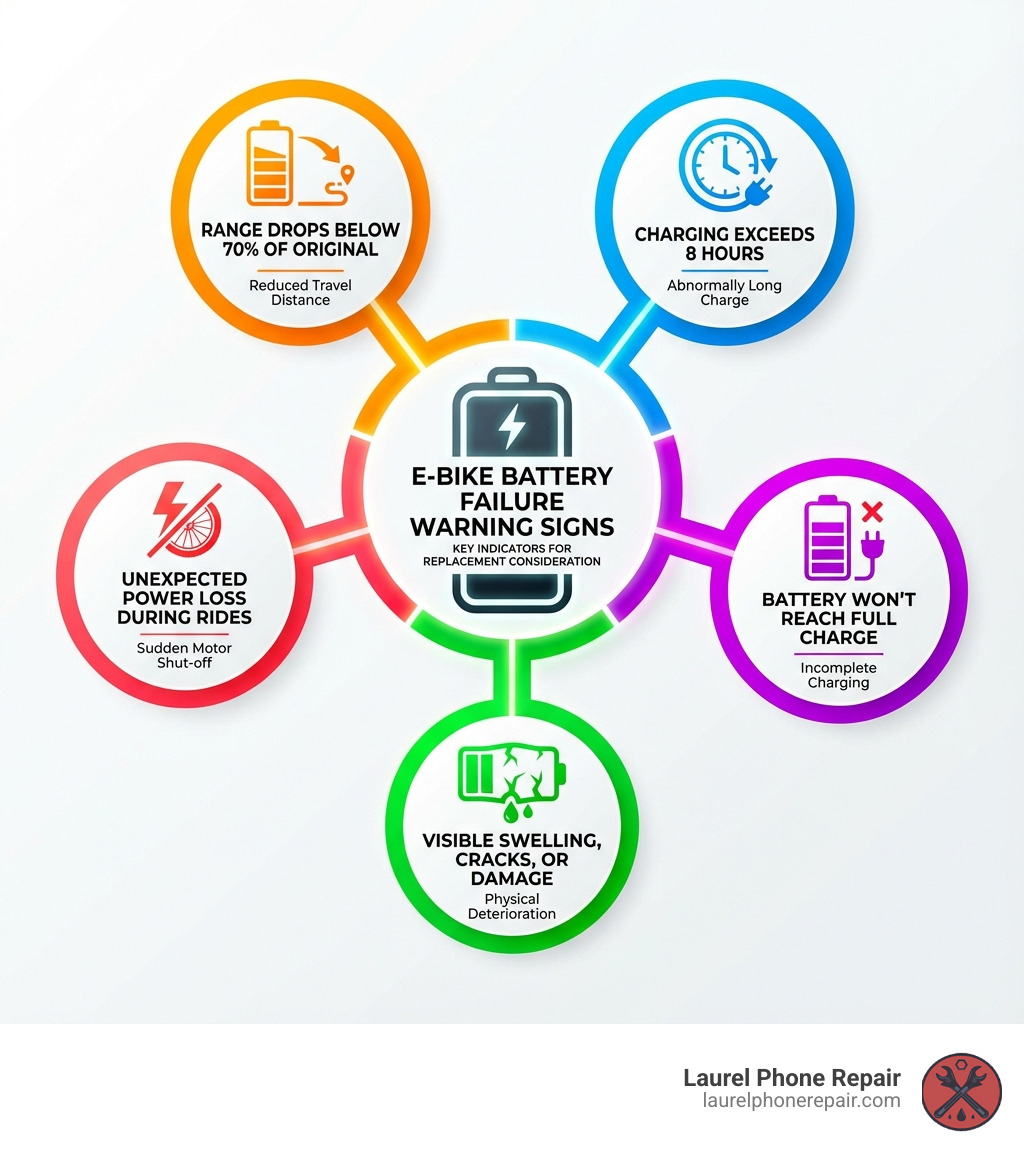
Is It Time for a Change? Recognizing a Failing Battery
You’re out enjoying the scenic paths around Laurel, Hattiesburg, or Jackson, Mississippi, when suddenly your e-bike feels sluggish, or worse, completely cuts out. These aren’t just minor inconveniences; they’re often the tell-tale signs that your e-bike battery is waving a white flag. Recognizing these signals early can prevent you from being stranded and help you make an informed decision about ebike battery replacement.
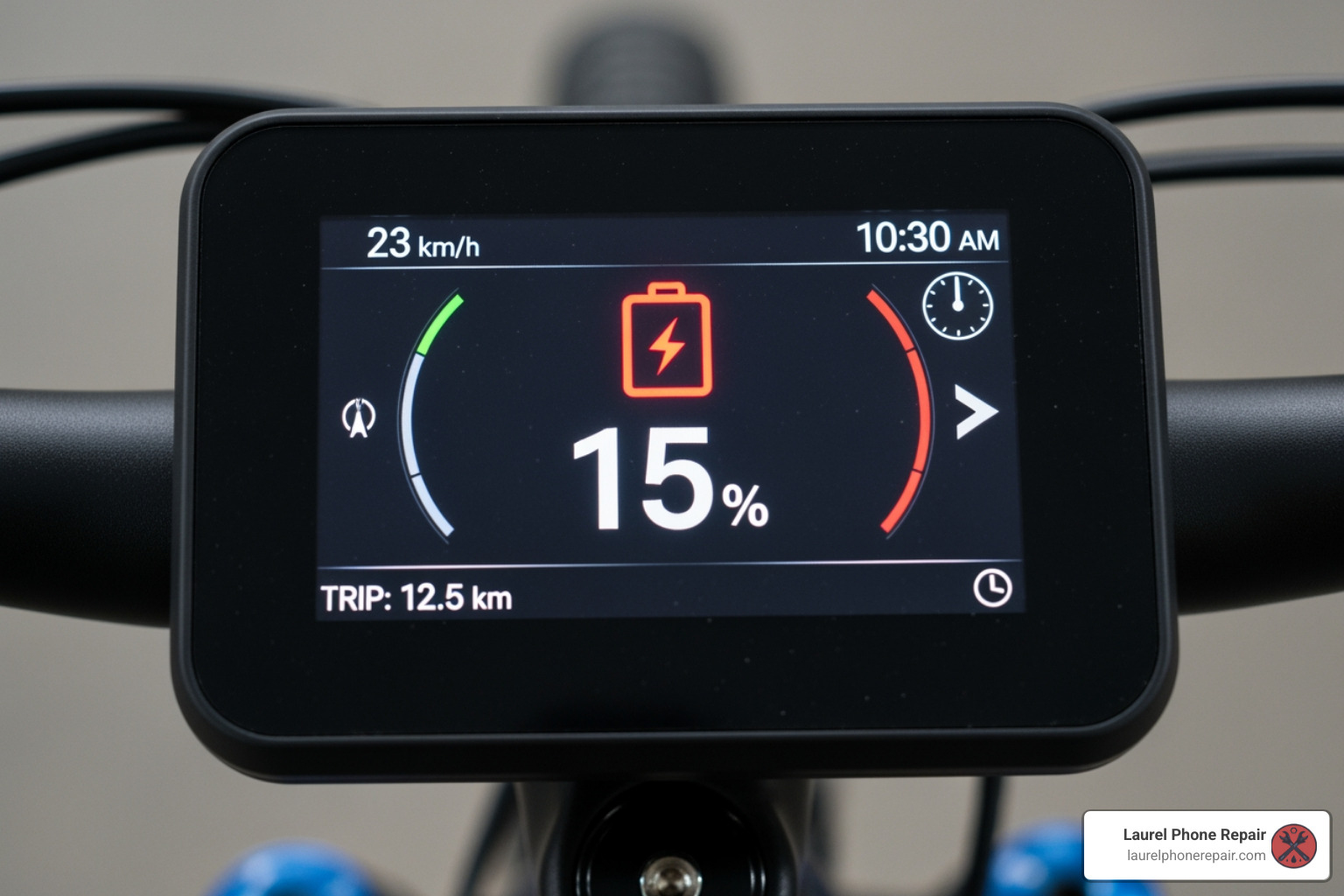
Here’s what to look for:
- Reduced Range: This is one of the most common indicators. If your bike used to take you 40 miles on a charge, but now it’s only managing 20 or 25, your battery has likely lost a significant portion of its capacity. A rider might not notice a small capacity loss at first, but it becomes apparent with regular use.
- Slower Acceleration and Less Power: A healthy battery provides consistent power to your motor, giving you that satisfying boost. If your e-bike struggles on inclines that were once easy, or acceleration feels noticeably weaker, the battery might not be delivering power efficiently. For instance, while a 48V battery generally delivers more power and better hill-climbing than a 36V, a degrading 48V battery will still show a marked decline in performance.
- Power Cutting Out Unexpectedly: Imagine cruising down a street in Jones County, and your e-bike suddenly dies. This is a critical sign. If your battery runs out very quickly, allowing only a few kilometers of range, replacement should be considered. Weak batteries can die mid-ride and may even damage the bike’s motor or control unit due to inconsistent power delivery.
- Failure to Hold a Full Charge: You charge your battery overnight, only to find it’s already lost a bar or two by morning, or it drains rapidly even when not in use. This indicates a significant internal issue.
- Long Charging Times: While a new battery might take a few hours to fully charge, an aging one might take excessively long, or never quite reach 100%.
- Physical Damage: This is perhaps the most serious warning sign. Any visible swelling, cracks, or leaks in the battery case are red flags. Swelling indicates internal cell damage, which can be a significant fire hazard. If you notice any physical damage, stop using the battery immediately. If a battery is leaking, we urge you to call us immediately for guidance.
How Battery Age Affects Your Ride
Just like any rechargeable device, your e-bike battery doesn’t last forever. The total lifespan of a quality lithium-ion e-bike battery is typically 500 to 1,000 charge cycles, translating to 3-5 years of use. Manufacturers of e-bikes and e-bike drives often recommend replacing the battery after four to five years, or after 500 to 1,000 charge cycles, whichever comes first.
The primary culprit behind reduced performance is capacity loss. E-bike batteries lose approximately ten percent of their capacity each year due to charging and general use. This gradual decline means that over time, your battery simply can’t store as much energy as it once could.
This capacity loss directly impacts your e-bike’s performance:
- Reduced Range: As discussed, less stored energy means shorter rides.
- Diminished Power Output: A battery with lower capacity struggles to provide the consistent, high-power bursts needed for acceleration or tackling hills. This can lead to your e-bike feeling less responsive and making those Mississippi hills a real workout.
- Inconsistent Performance: You might experience erratic power delivery, with the motor feeling strong one moment and weak the next.
Your e-bike battery is the heart of your ride, defining its power, range, and reliability. Replacing an e-bike battery restores smooth, powerful performance and reduces the stress of constantly watching your battery gauge.
Decoding Your E-Bike’s Power Source
Before diving into ebike battery replacement, it’s crucial to understand the different types of batteries out there. E-bike manufacturers have gotten creative with battery placement, influencing both aesthetics and function.
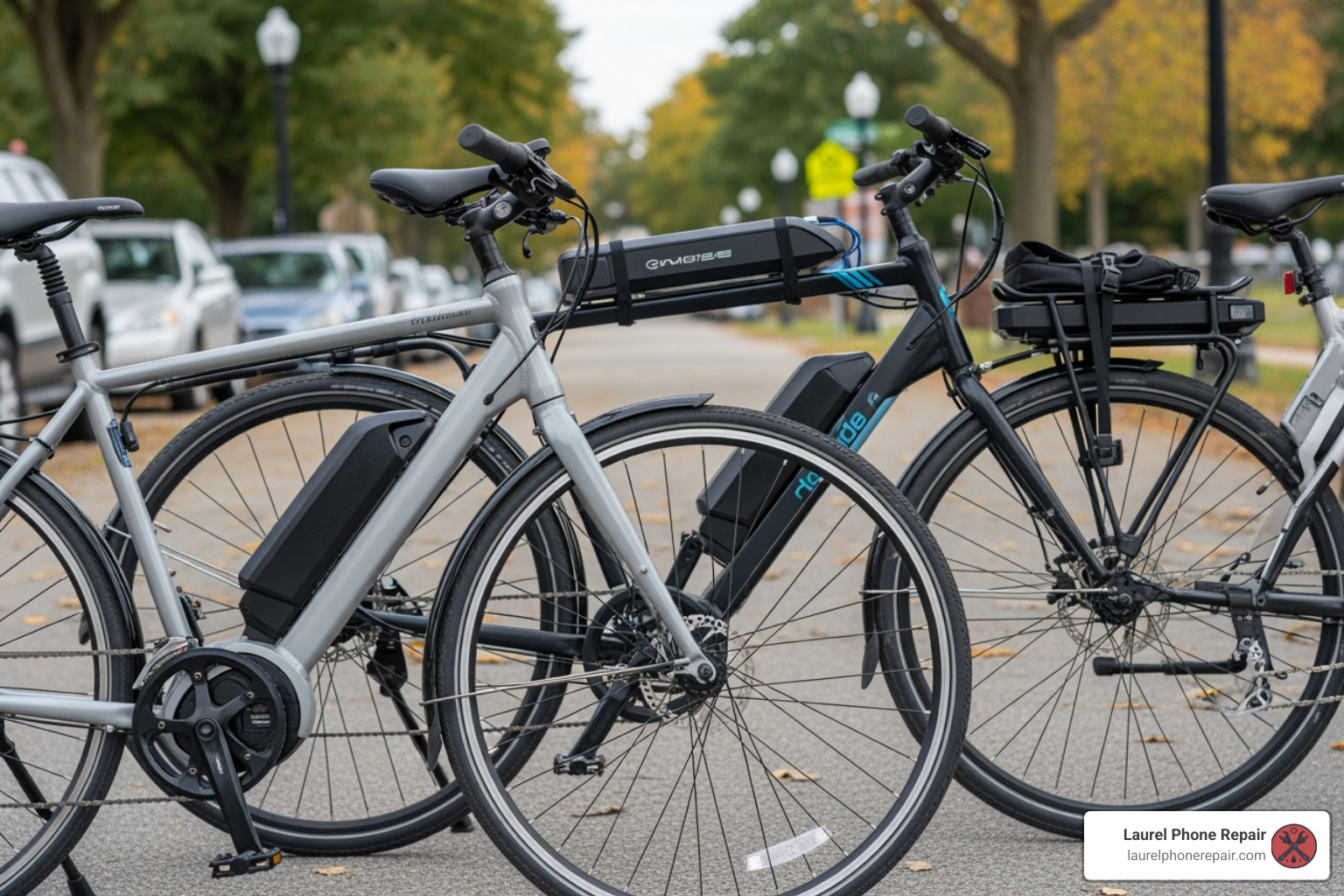
The three primary physical form factors you’ll encounter are:
- Integrated Batteries: These batteries are designed to be seamlessly hidden within the e-bike’s frame, often in the downtube. They offer a sleek, clean look, making the e-bike resemble a traditional bicycle. While aesthetically pleasing, their replacement can be more complex, often requiring specialized tools and expertise. For fully integrated batteries, we always recommend letting a specialist handle the replacement due to the intricate wiring and frame integration.
- External Downtube Batteries: This is a very common design where the battery attaches to the downtube of the frame, but it’s clearly visible and easily removable. These are generally simpler to remove and install, making DIY replacement more feasible for some riders.
- Rack-Mounted Batteries: These batteries are typically found on the rear rack of the e-bike. They are often easy to access and remove, making them a practical choice for commuters who might want to charge their battery separately or carry a spare.
The physical form factor significantly impacts the bike’s handling, aesthetics, and convenience. For example, a heavy rack-mounted battery can shift the bike’s center of gravity, while an integrated battery keeps the weight low and central for better balance.
Understanding Key Specifications
When it comes to ebike battery replacement, numbers matter. Understanding the key specifications—Voltage, Amp-hours, and Watt-hours—is vital for choosing a compatible and effective replacement.
- Voltage (V): This dictates the power output of your e-bike. Common voltages are 36V and 48V, though some go higher. A 48V battery delivers more power more efficiently than a 36V battery, resulting in faster acceleration and better hill-climbing. A 48V system can provide the same amount of power to the motor while drawing less electrical current (amps) than a 36V system, which improves overall efficiency. When replacing your battery, it’s crucial to match the original voltage of your e-bike’s motor system.
- Amp-hours (Ah): This measures the battery’s capacity, essentially how much “fuel” it can hold. A higher Amp-hour rating means a larger fuel tank and, consequently, a longer range. Generally, if the voltage and physical connectors match, using a battery with a higher Ah rating is a great way to increase your range.
- Watt-hours (Wh): This is arguably the most important metric for judging an e-bike’s total range. Watt-hours are calculated by multiplying Volts (V) by Amp-hours (Ah). For instance, a 48V 10Ah battery has 480Wh. A 672Wh battery might offer a range of 27 miles under heavy use or up to 45 miles in ideal conditions. Your real-world results will vary, but a higher Wh rating always provides a greater potential range.
Every e-bike battery also contains a sophisticated Battery Management System (BMS). This is the “brain” of the battery, a critical component that monitors and controls its performance and safety. The BMS protects the battery from overcharging, over-discharging, overheating, and short-circuiting. It also balances the charge across individual cells, maximizing their lifespan. Sometimes, a BMS entering a protective “sleep mode” can mimic a dead battery, which is why a professional diagnosis is often the first step in addressing battery issues.
Your Guide to Ebike Battery Replacement
So, you’ve determined your e-bike battery needs replacing. The next step is navigating the process to ensure you get the right fit and avoid potential headaches.
The journey to a successful ebike battery replacement starts with careful selection and ends with proper installation.
Choosing the Right Ebike Battery Replacement
Finding the correct replacement battery for your specific e-bike model is paramount. It’s not just about voltage and capacity; physical fit and connector compatibility are equally important.
-
Match Specifications:
- Voltage (V): Always match the original voltage of your e-bike system. Using an incorrect voltage can damage your motor and controller.
- Amp-hours (Ah): You can often upgrade to a higher Ah battery (for more range) if it physically fits and is compatible with your motor’s power draw.
- Watt-hours (Wh): Consider this for total range potential. Wh = V x Ah.
-
Physical Fit and Connectors:
- Mounting: Ensure the new battery’s mounting mechanism (e.g., downtube, rack, integrated) matches your bike’s frame.
- Dimensions: Even if the type is correct, check the battery’s length, width, and height to ensure it fits without obstruction.
- Connectors: The battery’s power output connector and charging port must be identical to your e-bike’s system and charger.
The average cost of an e-bike battery replacement can be a significant investment, often ranging from several hundred to over a thousand dollars, depending on the model, brand, and specifications. This is why making an informed decision is so important.
When considering options, you’ll generally encounter two categories:
| Feature | Original Manufacturer (OEM) Batteries | Third-Party Batteries |
|---|---|---|
| Pros | – Guaranteed compatibility | – Often more affordable |
| – Assured quality and performance | – Wider availability, especially for older models | |
| – Maintains e-bike warranty (if applicable) | – Potential for custom capacities/configurations | |
| Cons | – Generally more expensive | – Variable quality and reliability |
| – Availability can be limited for older models | – May void e-bike warranty | |
| – Less flexibility in capacity upgrades | – Risk of safety issues (fire hazards, poor BMS) if from an unknown source | |
| – Compatibility issues (physical fit, connectors, BMS communication) | ||
| Recommendation | Always the first choice if available and within budget. It ensures optimal performance and safety. | Proceed with extreme caution. Prioritize reputable third-party brands known for quality and safety certifications. Using a non-original replacement pack potentially introduces all sorts of uncontrolled risks and may void the e-bike warranty. |
Safety Certifications: Regardless of whether you choose OEM or a third-party option, always look for crucial safety certifications. For instance, UL Certified, Hazmat Safety Certified (UN38.3), and batteries that have passed third-party technical lab safety tests are indicators of quality. UL 2849 for e-bikes and UL 2271 for e-bike battery packs are critical safety certifications to look for. These certifications ensure the battery has undergone rigorous testing for electrical, mechanical, and fire safety. You can learn more about these standards here: E-Bikes Certification and Testing to UL 2849 – UL Solutions.
DIY vs. Professional Ebike Battery Replacement
The temptation to save a few dollars by attempting a DIY ebike battery replacement can be strong. However, we strongly advise against it for most integrated or complex battery systems, and even for simpler external batteries if you’re not experienced.
DIY Risks:
- Fire Hazard: Lithium-ion batteries store significant energy. Improper handling, short-circuiting cells, or using incorrect tools can lead to overheating, thermal runaway, and dangerous fires or explosions. True cell replacement for e-bike batteries is a highly specialized and dangerous task not recommended for home users.
- Electrical Shock: High voltage can deliver a nasty shock.
- Voiding Warranty: Most e-bike manufacturers will void your warranty if you attempt unauthorized repairs or use non-approved parts.
- Damage to Your E-bike: Incorrect installation can damage the battery, the e-bike’s electronics, or the motor. For instance, with non-removable frame integrated batteries, DIY replacement can get tricky in a hurry.
When to Seek Professional Help:
For the safety of yourself and your e-bike, we recommend professional assistance in the following scenarios:
- Integrated Batteries: These are complex to access and replace.
- Uncertainty: If you’re unsure about compatibility, installation, or diagnosing the issue.
- Complex Issues: If the problem seems to stem from the BMS or motor controller rather than just a dead battery. Specialist technicians have analysis tools to diagnose battery issues accurately. A professional diagnosis is the first step for battery issues, as a BMS entering protective sleep mode can mimic a dead battery.
Our experienced technicians at Laurel Phone Repair specialize in battery diagnosis and replacement. We offer transparent part options and are committed to high customer satisfaction with warranties on our work. You can find more information about our services here: More info about professional battery repair.
Smart Habits: Maximizing Your Battery’s Lifespan
Once you have a new or healthy battery, adopting smart habits can significantly extend its lifespan and maintain optimal performance on your rides through Mississippi.
- Charging Best Practices:
- Charge Regularly, Avoid Extremes: Charge your battery after each ride and as soon as possible when it’s low. Avoid letting it drain completely. Lithium-ion batteries have no “memory effect,” so partial charges are fine.
- Partial Charging is Key: For the longest lifespan, try to keep your battery’s charge between 20% and 80% when possible.
- Avoid Overnight Charging (Unless Smart Charger): While many modern chargers have cut-off features, it’s best to avoid leaving your battery plugged in overnight unless you have a smart charger that automatically stops charging when full.
- The 40-80% Storage Rule: For long-term storage (more than a few weeks), it is recommended to keep the battery charged between 40% and 80% (or 40%-70%). Store it in a cool, dry place.
- Using the Correct Charger: Always use the official charger that came with your battery or a manufacturer-approved replacement. Using aftermarket chargers not tested for your specific battery can damage it, create a safety hazard, or even void your warranty. Using a charger that comes from the original manufacturer helps it sync well with the battery and avoid overloading.
- Temperature Effects on Performance: Temperature is a battery’s best friend and worst enemy.
- Ideal Charging Temperature: The recommended charging range for e-bike batteries is between 41°F to 77°F (5°C to 25°C). Charging outside this range, especially in very hot conditions (above 100°F or 38°C), can stress the battery and shorten its life.
- Ideal Riding Temperature: The recommended use (riding) temperature range for e-bike batteries is 5°F to 105°F (-15°C to 40°C). Extreme cold can reduce range and power, while extreme heat can cause permanent damage. Storing a battery above 131°F (55°C) can cause permanent range decline or critical failure.
- Storage Temperature: Recommended long-term storage range is 40°F to 77°F (5°C to 25°C). Avoid storing in freezing temperatures or excessively hot environments.
For more in-depth knowledge on prolonging battery life, we recommend resources like: How to Prolong Lithium-based Batteries – Battery University.
The Final Step: Safe Disposal and Future Tech
Your e-bike battery, like all electronics, eventually reaches the end of its useful life. Proper disposal is not just good practice; it’s an environmental responsibility.
What to Do With Old Batteries:
Never throw your old e-bike battery in the regular trash. These batteries contain valuable materials and hazardous chemicals that require specialized recycling. Ideally, take your old e-bike battery back to the dealer you bought it from, who will send it on for recycling.
In the US, the industry is actively setting up recycling schemes. Call2Recycle, for example, coordinates a network of battery drop-off locations, often at independent bike shops. This makes it easier for you to responsibly dispose of your old battery. You can find a recycling location near you through their website: Find a recycling location with Call2Recycle.
Latest Advancements:
The world of e-bike batteries is constantly evolving. Looking ahead, we anticipate exciting advancements that will further improve performance, safety, and sustainability:
- Solid-State Batteries: These next-generation batteries promise higher energy density, faster charging, and improved safety compared to current lithium-ion technology.
- Faster Charging: Innovations are continually pushing the boundaries of how quickly batteries can be recharged, reducing downtime between rides.
- AI-Managed BMS: Artificial intelligence integrated into Battery Management Systems will offer even more precise control over battery health, optimizing performance, predicting issues, and extending lifespan.
- More Eco-Friendly Recycling: Efforts are underway to develop more efficient and environmentally sound methods for recycling battery components, reducing waste and recovering valuable materials.
Frequently Asked Questions about E-Bike Batteries
How long does a typical e-bike battery last?
A quality lithium-ion battery typically lasts 3-5 years, or between 500 and 1,000 full charge cycles, before its capacity significantly diminishes. This lifespan is influenced by factors like charging habits, storage conditions, and riding temperatures. Manufacturers often recommend replacement after four to five years or after 500 to 1,000 charge cycles.
Can I upgrade to a battery with a higher capacity (Ah)?
Generally, yes. As long as the voltage of the new battery is the same as the original (e.g., replacing a 48V battery with another 48V battery), using one with a higher Amp-hour (Ah) rating is a great way to increase your range. A higher Ah simply means the “fuel tank” is bigger. Just ensure the new battery will physically fit on your bike’s mount and that its maximum continuous discharge current can support your motor. Always double-check physical dimensions and connector types before purchasing.
Are e-bike batteries from different brands interchangeable?
Usually, no. E-bike batteries are specifically designed to work with particular motor systems, controllers, and physical mounts. While some manufacturers might have cross-compatible batteries within their own product lines (e.g., certain Bosch PowerPack models), generally, you should only replace a battery with one that comes from the same manufacturer and is of exactly the same specifications. Using an incompatible battery can be dangerous, may damage your e-bike’s electrical system, and will likely void your warranty. Using a non-original replacement pack potentially introduces all sorts of uncontrolled risks.
Conclusion: Power Up Your Ride with Confidence
Navigating ebike battery replacement might seem daunting, but with the right knowledge, it’s an opportunity to revitalize your ride. We’ve explored the tell-tale signs of a failing battery, the critical specifications to consider, and the nuanced choices between OEM and third-party options. We’ve also emphasized the paramount importance of safety, urging caution against risky DIY repairs and advocating for professional assistance when needed.
Smart charging habits and proper storage are your battery’s best friends, significantly extending its life. And when the time finally comes, responsible recycling ensures your old battery doesn’t harm our environment.
By making informed decisions, you’re not just replacing a part; you’re investing in countless more miles of joyful, confident riding. For expert diagnosis, professional ebike battery replacement services, or any battery-related concerns for your e-bike, trust the experienced technicians at Laurel Phone Repair. We’re here to keep the heart of your ride beating strong.
Get a quote for your battery repair today