
Smart device repair warranty options 2025: Best Choices
Why Understanding Smart Device Repair Warranty Options Matters More Than Ever
Smart device repair warranty options 2025 encompass several key protection types for your phones, tablets, and connected devices:
| Protection Type | What It Covers | Best For |
|---|---|---|
| Manufacturer Warranty | Defects in materials and workmanship | Basic coverage (included with purchase) |
| Extended Warranty/Service Contract | Mechanical failures after manufacturer warranty expires | Users keeping devices 2+ years |
| Accidental Damage Protection | Drops, spills, cracked screens | Users prone to accidents |
| Device Insurance | Loss, theft, catastrophic damage | High-value devices or high-risk situations |
| Multi-Device Plans | All home tech under one plan | Households with 15+ connected devices |
Your smartphone goes everywhere, and so does the risk of damage. With two in three owners experiencing damage last year and repairs costing over $500, coverage is critical. The average home has 22 connected devices worth over $11,000, making smart protection essential.
The warranty landscape has evolved significantly. You’re no longer limited to single-device manufacturer warranties. Today’s options range from carrier-backed insurance plans to comprehensive home tech subscriptions that protect everything from your iPhone to your smart doorbell.
But which option is right for you? The answer depends on how you use your devices, your risks, and what you’re willing to pay for peace of mind.
With over 20 years in electronics repair and 500+ Apple certifications, I’m Ralph Harris. At Laurel Phone Repair, I’ve helped hundreds of customers steer smart device repair warranty options 2025, saving them thousands of dollars and significant frustration by helping them understand what protection truly means for their devices.

The Main Players: Types of Smart Device Protection
When protecting our smart devices, we are looking at a few distinct categories, each with its own strengths. It is about choosing the right type of coverage for the right situation.
The landscape of device protection has matured, offering more choices than ever. Recent findings from Deloitte show that most U.S. households contain 22 connected devices, emphasizing the growing need for comprehensive protection. Let’s break down the main types of smart device repair warranty options 2025.
Manufacturer’s Limited Warranty
This is the baseline coverage included with every new smart device. It typically covers defects in materials and workmanship for one year, free of charge. It guarantees the device works as intended out of the box. If your phone’s port is faulty or the screen goes blank, the warranty should cover it. However, it explicitly does not cover accidental damage, normal wear and tear, or software issues. It is a safety net for factory flaws, not user mishaps.
Extended Warranties & Service Contracts
These plans extend coverage for mechanical and electrical failures beyond the original manufacturer’s warranty period. They often include options for accidental damage protection.
- Post-Warranty Coverage: An extended warranty covers mechanical malfunctions after the initial warranty expires, which is valuable for devices you plan to keep for several years.
- Accidental Damage Options: Many extended warranties offer accidental damage from handling (ADH) coverage. This means drops, spills, and cracked screens are covered, though usually with a deductible. For example, some manufacturer-backed plans specifically cover ADH for as long as the device is enrolled.
- Manufacturer-Backed vs. Third-Party Plans: Manufacturers like Google and Apple offer their own extended plans (for example, Pixel Care+, AppleCare+), often promising repairs with genuine parts. Third-party providers, such as Allstate or Asurion (which powers many carrier plans like T-Mobile’s Protection 360), also offer extended warranties for a wider range of brands.
Device Insurance Plans
Device insurance is different. While warranties cover defects and sometimes accidents, insurance plans are designed for catastrophic events such as loss and theft.
- Loss and Theft Coverage: If your device is lost or stolen, an insurance plan can help you replace it. This is a crucial distinction, as warranties almost never cover these events.
- Catastrophic Damage: Some insurance plans also cover damage so severe it is irreparable, such as from fire or floods, which standard warranties typically exclude.
- Often Bundled by Carriers: Major mobile carriers frequently bundle device insurance with their protection plans. T-Mobile’s Protection 360, for instance, includes loss and theft coverage, often underwritten by an insurance company.
Manufacturer vs. Third-Party vs. Insurance: A Head-to-Head Comparison
Choosing the right protection can be tricky. Understanding the strengths of each option is key to making an informed decision for your devices in Laurel, Hattiesburg, Jackson, or Jones County. Let’s compare them.
| Feature | Manufacturer Warranty | Extended Warranty / Service Contract | Device Insurance Plan |
|---|---|---|---|
| Coverage Type | Defects in materials/workmanship | Mechanical/electrical failures; often includes ADH | Loss, theft, accidental damage, catastrophic events |
| Cost | Included with device purchase | Monthly fee or one-time payment | Monthly premium + deductible |
| Duration | Typically 90 days to 1 year | 1-3 years or ongoing monthly | Ongoing monthly |
| Best For | Basic peace of mind against factory flaws | Extending device lifespan; accident-prone users | High-value devices; high risk of loss/theft |
| Claim Limit | Often single repair/replacement | Can be limited or unlimited (with deductibles) | Often limited (e.g., 2-5 claims per 12 months) |
| Deductible/Service Fee | None | Yes, per claim | Yes, per claim |
Pros and Cons of Each
Manufacturer Warranty:
- Pros: Free, covers manufacturing defects.
- Cons: Short duration, no accidental damage, no loss/theft coverage.
Extended Warranty/Service Contract:
- Pros: Extends device life, often includes accidental damage, can be purchased later.
- Cons: Additional cost, may have deductibles, usually doesn’t cover loss/theft.
Device Insurance Plan:
- Pros: Covers loss, theft, and severe accidental damage; immediate replacement often available.
- Cons: Highest ongoing cost, significant deductibles, often has claim limits, may replace with a reconditioned device.
How They Work Together
These plans aren’t mutually exclusive; your manufacturer warranty is the first line of defense. An extended warranty kicks in after the manufacturer’s expires for defects, while its accidental damage component might overlap with insurance. Device insurance is unique in its coverage for loss and theft.
For example, a manufacturing defect in the first year is handled by your manufacturer warranty. If you crack the screen, an extended warranty with ADH or an insurance plan would cover it (after a deductible). If your phone is stolen, only an insurance plan will help.
Many comprehensive plans, like T-Mobile’s Protection 360, combine aspects of extended warranties (accidental damage, mechanical failure) and insurance (loss and theft). They often include perks like identity theft protection.
The best approach is often a combination or a single bundled plan. Understanding the specific terms is what matters most. We encourage you to learn more about our comprehensive device protection by visiting our warranty page.
Navigating Smart Device Repair Warranty Options in 2025

Choosing the right protection plan in 2025 requires careful evaluation of the fine print. We are here to help you understand the key decision factors to get coverage that serves your needs. It is about assessing your personal risk and understanding the total cost of ownership, not just the monthly premium.
Key Factors for Choosing Smart Device Repair Warranty Options in 2025
When evaluating smart device repair warranty options 2025, several critical elements demand your attention. These details can significantly impact your experience when you file a claim.
- Cost vs. Coverage: This is a classic balancing act. A cheaper plan might not cover common issues, while a more expensive one could be more protection than you actually need. Compare the premium against the breadth of protection (accidental damage, loss, theft, mechanical failure). Laurel Phone Repair offers transparent pricing for repairs, so you can weigh warranty costs against out-of-pocket expenses.
- Deductibles: This is the amount you pay out-of-pocket per approved claim. Deductibles vary based on the device, damage type, and plan. Some plans may offer “$0 screen repairs” but have a high deductible for other damage or a full replacement. Always check the deductible schedule for your specific device.
- Service Fees: Similar to deductibles, some plans charge a “service fee” instead of or in addition to a deductible. This is another out-of-pocket cost to be aware of.
- Claim Limits: How many times can you use your warranty? Some plans offer “unlimited claims” for certain damage types but impose strict limits for loss and theft (for example, some plans limit loss or theft claims to 2-5 in a 12-month period). Understand if these limits reset annually or are cumulative.
- Repair vs. Replacement Policies: Will your device be repaired or replaced? If replaced, will it be new or reconditioned? How quickly will you get it? Some plans aim for overnight shipping of replacements. Understanding these policies is crucial if you need a quick turnaround.
Common Exclusions in Smart Device Repair Warranty Options in 2025
Knowing what is not covered is just as important as knowing what is. Overlooking exclusions can lead to surprises.
- Cosmetic Damage: Scratches and dents that do not affect functionality are almost universally excluded.
- Intentional Damage: Deliberately damaging your device or damage from reckless conduct is not covered.
- Unauthorized Repairs: Attempting to fix a device yourself or using an unauthorized shop can void your warranty. Always check with your provider first. At Laurel Phone Repair, our experienced technicians ensure quality repairs that maintain your device’s integrity.
- Pre-existing Conditions: A plan purchased after buying a device usually will not cover issues that already existed.
- Software Issues: Most warranties focus on hardware. Software glitches, viruses, and data loss are typically not covered, though some plans offer tech support.
- Consumable Parts like Batteries: While some advanced plans (such as Pixel Care+) offer battery replacements if capacity drops below 80%, many standard warranties consider batteries consumable and do not cover their natural degradation.
Beyond Single-Device Plans: The Rise of Home Tech Protection
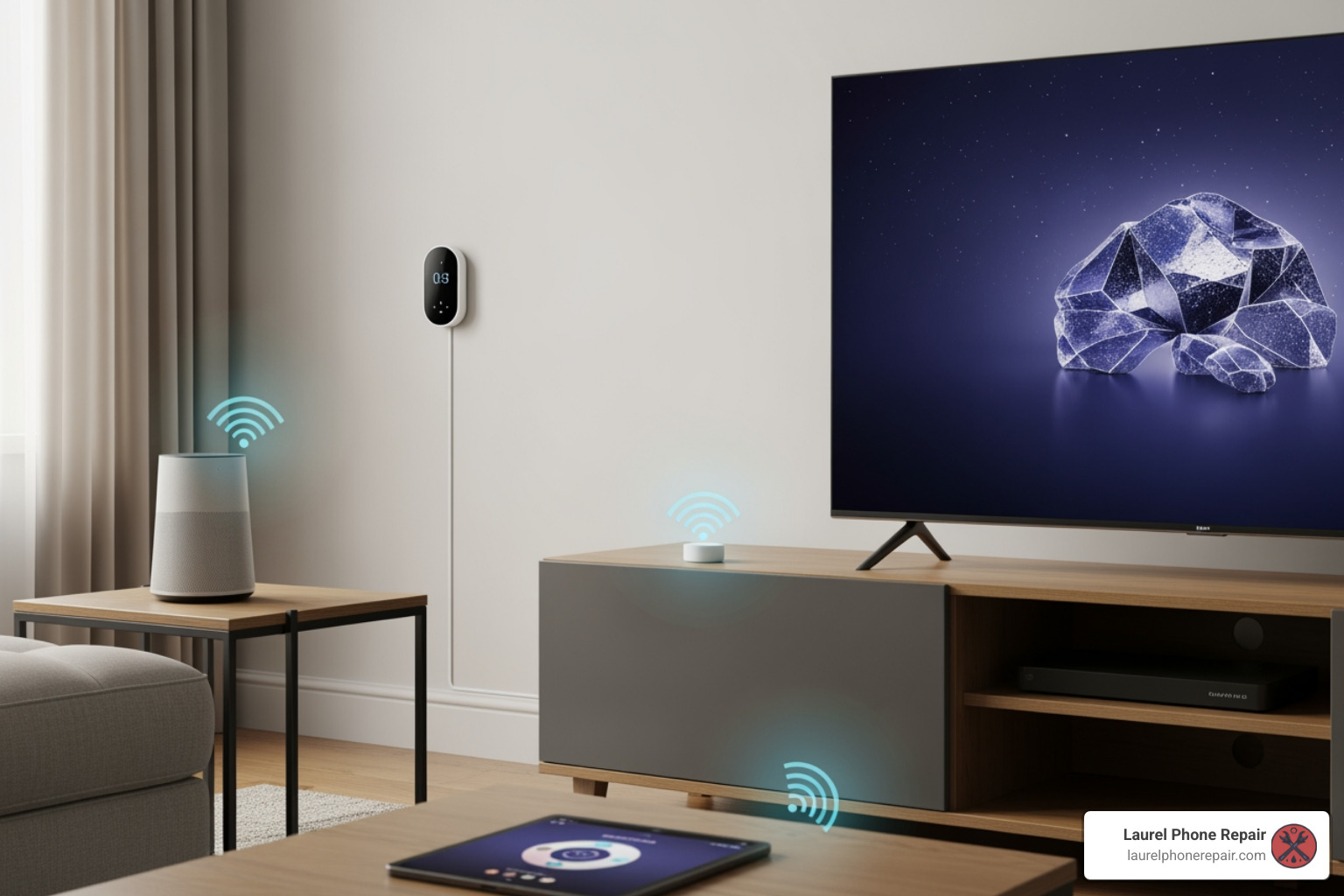
In 2025, our homes are smarter than ever. With an estimated 259 million smart homes worldwide in 2021 and most U.S. households containing 22 connected devices, single-device warranties are struggling to keep up. We’ve moved beyond just protecting our phones to needing a safety net for our smart speakers, thermostats, laptops, and gaming consoles. This has led to the rise of comprehensive home tech protection plans.
All-in-One Home Plans
All-in-one home plans promise to cover virtually all eligible tech in your home with a single policy, regardless of brand or purchase location. Companies like Asurion are leaders in this space with their Home+ offering.
- Covering All Home Tech: These plans typically cover a vast array of devices, including phones, tablets, laptops, smart home gadgets, wearables, gaming consoles, TVs, and more.
- Single Monthly Fee: Instead of juggling multiple warranties, you pay one affordable monthly fee, which can be a significant saving compared to individual plans.
- Future Purchases Included: A key advantage is that these plans often cover eligible future purchases automatically.
- Comprehensive Damage Protection: They typically go beyond defects to include mechanical breakdowns, normal wear and tear, power surges, and often accidental damage like drops, spills, and cracked screens.
Benefits of Comprehensive Coverage
These multi-device plans offer more than just convenience; they provide a suite of benefits for our connected lives.
- Unlimited Claims (within limits): While aggregate limits usually apply (e.g., up to $2,000 per claim and $5,000 in a 12-month period), these plans often allow for a high number of claims, providing peace of mind.
- $0 Screen Repairs: For smartphones, some plans offer $0 screen repairs, a highly sought-after feature. Some manufacturer-backed plans for Google phones, for instance, highlight this benefit.
- Tech Support Benefits: Many comprehensive plans also offer 24/7 expert tech support for help with setup, troubleshooting, and optimizing your smart home.
- Device Upgrade Flexibility: Plans offered by carriers often simplify device upgrades. For example, T-Mobile’s JUMP! Upgrades benefit allows eligible customers to upgrade their device after paying off 50% of the cost.
- Simplified Management: A single point of contact and a unified plan simplifies managing coverage, filing claims, and getting support.
The Claim Game: What to Expect When You Need a Repair
Even with a great protection plan, a broken device is stressful. Knowing the claims process can make the situation manageable. In Laurel, Hattiesburg, Jackson, or Jones County, we’re dedicated to making repairs smooth. You can always find more information about our support services.
The Claims Process Explained
While steps vary by provider, the general flow of a repair claim usually follows these steps:
- Contact Provider: Most providers have online portals or phone lines for claims. Have your plan details, device serial number, and incident details ready. For example, some carrier plans like T-Mobile’s Protection 360 allow claims online or via an app.
- Provide Incident Details: You’ll need to describe what happened clearly and honestly.
- Pay Deductible/Service Fee: Once approved, you’ll typically pay a deductible or service fee via credit card, debit card, or eCheck.
- Follow Repair/Replacement Instructions: The provider will guide you on the next steps, which could include:
- Mail-in repair: Shipping your device to a repair center.
- Walk-in repair: Taking your device to an authorized repair location.
- Advanced exchange: A replacement device is shipped to you, and you send your damaged one back.
- Onsite repair: A technician comes to you (less common for mobile devices).
- Disabling “Find My” Features: For loss, theft, or sometimes even repair claims, you may need to disable location tracking features like “Find My iPhone.” This is a security measure.
Prompt action is best. File your claim as soon as possible and follow the provider’s instructions carefully.
Cancellation, Renewal, and Transferability
Understanding the terms around cancellation, renewal, and transferability is crucial for flexibility.
- Cancellation: Most plans can be canceled at any time. You may get a full refund within a grace period (e.g., 30 days) or a pro-rated refund after. Always check the specific terms of your plan.
- Renewal: Many monthly or annual plans automatically renew. To avoid this, you must actively opt out or cancel before the renewal date. Keep track of your plan’s dates.
- Transferability: Can you transfer your plan if you sell your device? This varies. Some fixed-term, manufacturer-backed plans may allow a one-time transfer. Monthly subscription plans are generally not transferable. Confirm this with your provider if it’s important to you.
Frequently Asked Questions about Smart Device Warranties
At Laurel Phone Repair, we get many questions about device protection. Here are common ones to clarify your smart device repair warranty options 2025.
How can I verify the reputation of a warranty provider?
Verifying a provider’s reputation is essential for protecting your valuable technology.
- Check Online Reviews: Look for independent review sites. A quick search for reviews of a provider can yield valuable insights. Pay attention to common complaints or praises.
- Look for Clear Terms and Conditions: A legitimate provider will have easily accessible, comprehensive terms that outline coverage, exclusions, deductibles, and the claims process. A lack of clarity is a red flag.
- Verify Underwriter Information: For insurance-backed plans, the underwriter (the insurance company) should be clearly stated so you can research their reputation.
- Ask About Their Repair Network and Parts Quality: Does the provider use authorized repair centers and quality parts? At Laurel Phone Repair, we offer transparent part options (OEM vs. aftermarket) and stand by our work with a strong warranty.
Are there specific warranty options for different smart devices?
Yes. The type of device often dictates the protection available.
- Phones: Plans often include accidental damage (drops, spills) and loss or theft coverage. Features like “$0 screen repairs” are most common for smartphones.
- Wearables: Warranties for smartwatches and fitness trackers typically focus on mechanical failure and accidental damage. Loss and theft coverage is less common.
- Smart Home Devices: Protection for thermostats, cameras, and speakers usually centers on mechanical or electrical failure and power surge damage. Comprehensive home plans are often designed for this category.
- Laptops, Tablets, and Gaming Consoles: These often have options for accidental damage and extended mechanical failure coverage. Loss and theft are sometimes offered through carrier or insurance plans.
Coverage varies by device value and risk. Ensure the plan you choose aligns with the risks your device faces.
How do deductibles and service fees work?
Deductibles and service fees are out-of-pocket costs you pay per approved claim, separate from your plan’s premium.
- Deductible: This is a fixed amount you pay per claim. The amount can vary based on your device tier and the claim type. For example, a screen repair often has a lower deductible than a full device replacement for loss or theft.
- Service Fee: Some providers use this term interchangeably with “deductible” or as a separate fee for certain repairs. Always clarify what you will be responsible for paying.
These fees help offset repair costs and discourage frivolous claims. Factor them into your budget when choosing a plan.
Conclusion
Navigating smart device repair warranty options 2025 doesn’t have to be daunting. By understanding the types of protection—from basic manufacturer warranties to comprehensive home tech plans—and the key factors to consider, you can make an informed choice.
Peace of mind is invaluable. With our reliance on smart technology, protecting your devices is a wise investment. Whether you’re safeguarding a single phone or a whole smart home, understanding your plan’s coverage, deductibles, and claim process is paramount.
As your trusted local repair experts in Laurel, Hattiesburg, Jackson, and Jones County, we at Laurel Phone Repair are here to help. We believe in transparent service, experienced technicians, and high customer satisfaction. When your device needs a fix, count on us for quality repairs with clear part options (OEM vs. aftermarket) and a solid warranty.
Don’t wait for a break to understand your options. Take control of your device’s future today. Learn more about our comprehensive device warranty.